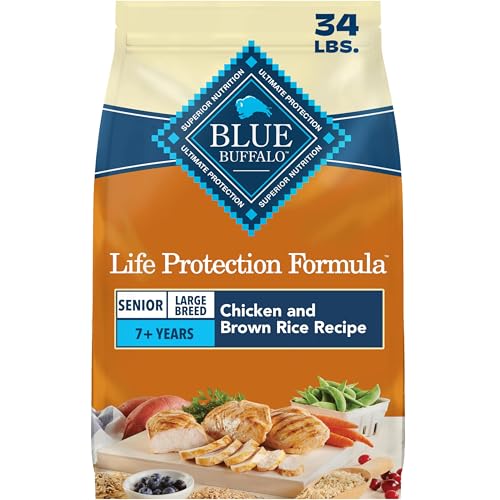
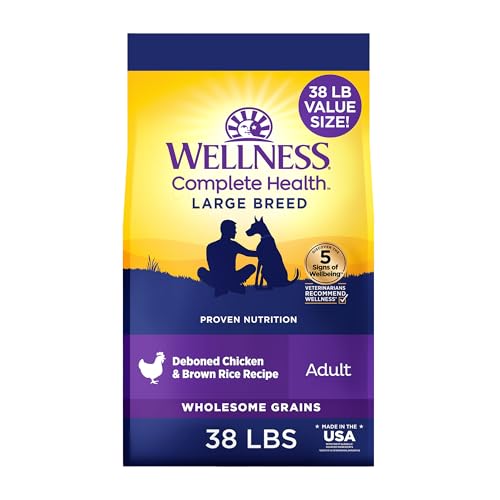
Quick answer
Our top pick is Purina Pro Plan Bright Mind Adult 7+ Large Breed Chicken & Rice Formula. It supports cognitive function with medium-chain triglycerides, provides glucosamine for joints, and is tailored for large-breed seniors. If your dog has a sensitive stomach, consider Hill’s Science Diet Adult 7+ Large Breed Chicken & Barley. For a budget-friendly option, Diamond Naturals Senior Formula is excellent.
What to consider for Dry Dog Food For Senior Large Dogs
Senior large dogs often face joint issues, weight management, and cognitive decline. Dry food for them should have moderate protein and fat to maintain muscle without excess calories, added glucosamine and chondroitin for joints, and omega-3 fatty acids for brain and coat health. Large kibble size encourages chewing and reduces gulping. Always consult your vet for specific dietary needs.
What to look for in a dog food
Look for an AAFCO statement confirming the food is complete and balanced for adult maintenance or senior dogs. The first ingredient should be a named meat source (e.g., chicken, lamb). Protein should be around 20 to 25% on a dry matter basis, fat around 10 to 15%, and calories moderate (300 to 380 kcal/cup). For large breeds, ensure kibble size is appropriate and the food is formulated for large-breed life stages. Joint supplements like glucosamine and chondroitin, plus omega-3s, are beneficial.
How we chose these picks
- Evaluated ingredients for named protein sources and absence of artificial additives.
- Checked AAFCO nutritional adequacy statements for adult or senior life stages.
- Prioritized products with added joint-supporting nutrients (glucosamine, chondroitin, omega-3s).
- Considered calorie and fat levels appropriate for less active senior large dogs.
- Reviewed brand reputation and manufacturing quality standards.
- Included options across price points to suit different budgets.
- Ensured products are widely available and currently sold on Amazon.
- Never ranked a product higher just because it pays a commission.
What to avoid
- Avoid foods with unnamed “meat meal” as the only protein source; opt for named meals like chicken meal.
- Be cautious with grain-free or legume-heavy recipes; the FDA DCM investigation is ongoing, so grain-inclusive is the safer default unless your vet advises otherwise.
- Do not feed a food labeled for “all life stages” to a large-breed puppy; it may have inappropriate calcium and phosphorus levels.
- Avoid abrupt diet switches; transition over 7 to 10 days to prevent digestive upset.
For more guidance, see our dog guides and explore dog food and dog nutrition categories.