Quick answer
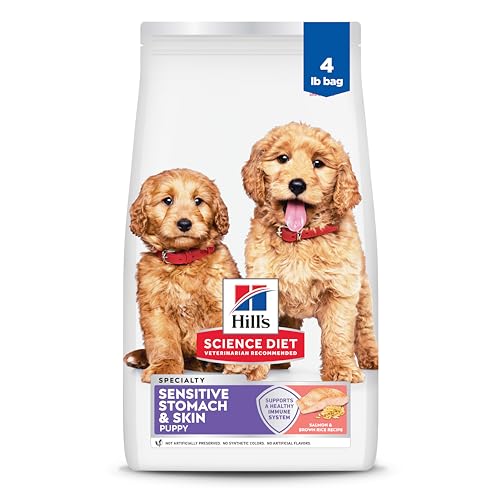
Our top pick for most rescue puppies is Purina Pro Plan Puppy Sensitive Skin & Stomach Salmon & Rice Formula. It offers easily digestible salmon, prebiotic fiber for gut health, and DHA for brain development, all at a reasonable price. For puppies with more severe sensitivities, Hill’s Science Diet Puppy Sensitive Stomach & Skin is a close second. And if budget is a primary concern, Diamond Naturals Puppy Formula provides solid nutrition at a lower cost.
What to consider for Puppy Food For Rescue Dogs
Rescue puppies often arrive with unknown backgrounds, including inconsistent nutrition and potential stress. Many have sensitive stomachs, food intolerances, or parasites. The ideal food should be highly digestible, with a single animal protein source and limited ingredients to minimize reactions. It should also provide balanced nutrition for growth, including DHA for brain development and appropriate calcium-to-phosphorus ratios for bone health. Avoid abrupt diet changes; transition slowly over at least a week.
What to look for in a dog food
Look for an AAFCO statement confirming the food is complete and balanced for growth or all life stages. The first ingredient should be a named meat (e.g., chicken, salmon, lamb). Protein should be around 22-32% on a dry matter basis, fat 8-20%, and calories 300-400 kcal/cup. For large breed puppies, ensure calcium levels are within AAFCO’s recommended range (0.8-1.2%) to support proper bone development. Added omega-3 fatty acids (DHA, EPA) support brain and eye development, while prebiotics like chicory root aid digestion.
How we chose these picks
- Evaluated ingredient lists for named meat sources and absence of artificial additives.
- Checked AAFCO feeding trial substantiation for growth or all life stages.
- Prioritized formulas with limited ingredients and single protein sources for sensitive stomachs.
- Considered price per pound to ensure value for rescue budgets.
- Reviewed customer feedback for palatability and digestive tolerance in puppies.
- Ensured products are widely available on Amazon and other major retailers.
- Never ranked a product higher just because it pays a commission.
What to avoid
- Avoid unnamed meat meals (e.g., “meat meal”) as the primary protein source, as they can be of lower quality and less digestible.
- Be cautious with grain-free or legume-heavy recipes; the FDA is investigating a potential link to canine dilated cardiomyopathy (DCM). Grain-inclusive diets are generally safer unless your vet advises otherwise.
- Do not feed an “all life stages” food to a large-breed puppy, as it may have inappropriate calcium levels that could affect bone development.
- Avoid abrupt diet changes; always transition over 7 to 10 days to prevent digestive upset.
For more guidance, browse our dog guides, dog food, and dog nutrition sections.