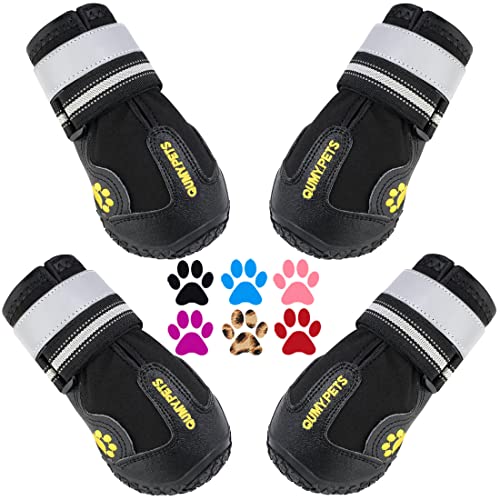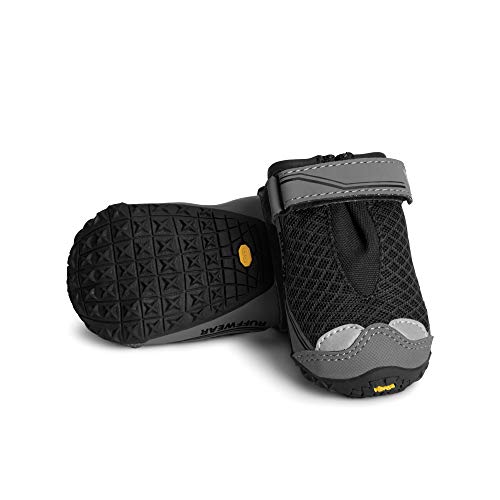
Quick answer
Our top pick is the Ruffwear Grip Trex Dog Boots for their exceptional traction, secure fit, and durability. They stay on well during runs and provide excellent paw protection. For a budget-friendly option, the Ultra Paws Durable Dog Boots offer good value with a simple design, though they may require more frequent adjustment. The Kurgo Step-N-Strobe Boots are ideal for visibility in low light, but their reflective features add slight bulk.
What to consider for Dog Boots For Greyhounds
Greyhounds have long, narrow feet with a distinctive shape: a large central pad, small outer toes, and a high arch. Standard dog boots often slip off or cause chafing. Look for boots with a secure fastening system (such as double straps or a cinch cord) and a flexible sole that allows natural foot movement. The boot should extend above the ankle to prevent debris entry. Measure your greyhound’s paw width and length carefully; many brands offer narrow sizes. Consider the primary use: hot pavement requires a sole with high heat resistance, while snow and ice call for waterproof materials and good grip. Greyhounds are prone to corns and skin irritation, so avoid boots with rough interior seams.
What to look for in a gear item (harness, collar, leash or muzzle)
For dog boots, focus on correct fit and sizing: measure paw width and length, and check the manufacturer’s sizing chart. Durable hardware and materials: look for reinforced stitching, rubber soles, and abrasion-resistant fabric. Safety features: reflective elements for visibility, escape-resistant closures (e.g., Velcro plus a strap), and non-slip soles. Comfort and padding: a soft inner lining that wicks moisture and prevents rubbing. No-pull design is not applicable to boots, but ensure the boot does not restrict the dog’s gait or cause discomfort.
How we chose these picks
- Evaluated boot design for greyhound-specific paw shape and fit.
- Assessed material quality, including sole durability and fabric breathability.
- Checked customer feedback for sizing accuracy and ease of use.
- Considered safety features such as reflectivity and secure fastening.
- Compared price points to offer options for different budgets.
- Reviewed manufacturer claims for waterproofing and heat resistance.
- Never ranked a product higher just because it pays a commission.
What to avoid
- Ill-fitting sizes: boots that are too tight can cause blisters, too loose will slip off.
- Flimsy clips or Velcro that fails after a few walks.
- Boots with hard, non-flexible soles that restrict natural paw movement.
- Materials that retain moisture, leading to skin infections.
- Boots without reflective elements for low-light safety.
Explore more dog guides and check out our dog care products and dog health sections for additional tips.