Quick answer
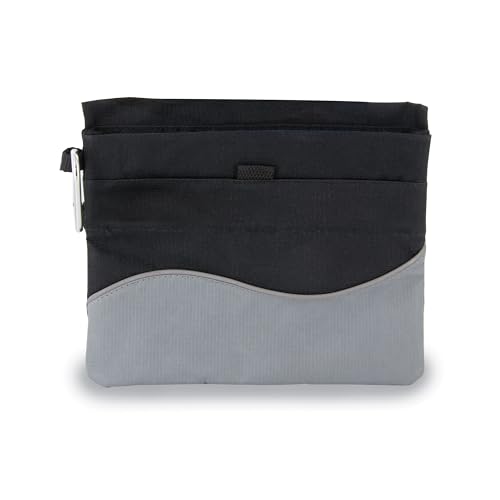
The best dog training pouch for Schnauzers is the PetSafe Treat Pouch with Clip. It offers a spacious main compartment, a drawstring closure for quiet access, and a belt clip for hands-free convenience. For owners who prefer a more rugged option, the Kurgo Dog Training Pouch provides a waterproof lining and multiple pockets. If budget is a concern, the HDP Big Capacity Treat Pouch delivers solid performance at a lower price.
What to consider for Dog Training Pouch For Schnauzers
Schnauzers are intelligent, energetic dogs that respond well to positive reinforcement. A training pouch should allow quick, quiet treat retrieval to maintain focus. Look for a pouch with a wide opening or drawstring that doesn’t rustle loudly. Since Schnauzers come in three sizes (miniature, standard, giant), consider the pouch’s capacity: miniature owners need less volume, while standard and giant owners may prefer larger pouches. Durability is key, as Schnauzers can be mouthy and may grab at the pouch. A clip or belt loop that securely attaches to your waist or pocket prevents the pouch from falling during active sessions. Also, consider ease of cleaning, as treats can leave crumbs and odors.
What to look for in a toy or chew (chew toy, puzzle, lick mat or dental chew)
When selecting a toy or chew for your Schnauzer, size is critical to prevent choking. For miniature Schnauzers, choose toys that are larger than their mouth opening. Durability should match your dog’s chew strength; moderate chewers can handle rubber toys, while heavy chewers need tough nylon or hard rubber. Always opt for non-toxic materials like food-grade silicone or natural rubber. For dental chews, look for the Veterinary Oral Health Council (VOHC) seal to ensure effectiveness. Enrichment value matters: puzzle toys that dispense treats or lick mats that spread peanut butter can keep a Schnauzer mentally stimulated and reduce boredom.
How we chose these picks
- Evaluated treat capacity and ease of access for training sessions.
- Assessed closure mechanisms for quiet operation and secure sealing.
- Checked attachment options: belt clips, waist straps, and carabiner compatibility.
- Reviewed material quality and durability for daily use.
- Considered ease of cleaning, including machine-washable options.
- Read customer feedback on long-term wear and tear.
- Compared price points to offer budget-friendly choices.
- Never ranked a product higher just because it pays a commission.
What to avoid
- Pouches with loud Velcro closures that can startle sensitive Schnauzers during training.
- Small pouches that cannot hold enough treats for a full session, leading to frequent refills.
- Pouches with weak clips that may detach from your belt or pocket during active movement.
- Materials that are difficult to clean, as treat residue can attract pests or cause odors.
- Pouches with sharp edges or hard components that could injure your dog if they jump or grab.
For more guidance, explore our dog guides, dog care products, and dog nutrition sections.


