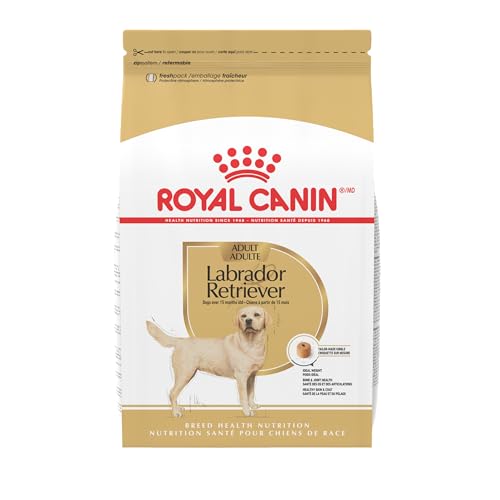
Quick answer: Best overall for Labs
Royal Canin Labrador Retriever Adult Dry Dog Food tops our list for Labradors because it’s specifically formulated for the breed with precise nutrient ratios and includes ingredients to support joint health and healthy weight management, though it carries a premium price point compared to all-breed formulas.
Why Labradors need the right choice
Labradors are a large breed prone to several health challenges that make nutrition especially important. Obesity affects 30 to 40 percent of Labs, significantly increasing risk for joint problems, diabetes, and heart disease. Adult Labs typically weigh 55 to 80 pounds and require careful calorie management paired with high-quality protein to maintain muscle mass while avoiding excess fat.
Beyond weight, Labradors commonly experience hip dysplasia and elbow dysplasia due to their size and genetic predisposition. Their high energy levels demand sufficient protein and fat for sustained activity, yet their food-motivated nature means they will overeat if given the chance. The right dog food balances these needs: controlled calories, adequate protein for muscle support, joint-supporting nutrients like glucosamine and chondroitin, and healthy fats for coat and skin health.
Labradors also have a reputation for food sensitivities and allergies, making ingredient quality and digestibility important considerations. Choosing a formula designed for large breeds or, better yet, for Labradors specifically, addresses these breed-specific challenges more effectively than generic adult formulas.
What to look for in Labrador dog food
When evaluating dog food for your Lab, consider these key factors:
- Protein content: Look for 22 to 26 percent protein for adult Labs. Adequate protein maintains lean muscle, especially important for active dogs and as Labs age.
- Fat levels: 10 to 15 percent fat supports energy needs without excess calories. Lower-fat options work well for Labs prone to weight gain.
- Calorie density: Most large breed formulas contain 350 to 400 calories per cup. Compare feeding guidelines to your dog’s current weight and activity level to avoid overfeeding.
- Joint support ingredients: Glucosamine, chondroitin, and omega-3 fatty acids help protect joints as Labs age. Breed-specific formulas often include these at higher levels.
- Ingredient quality: Named meat sources (chicken, lamb, fish) as primary ingredients indicate better digestibility than meat meals or by-products. Labs with sensitive stomachs benefit from limited ingredient or novel protein options.
- Fiber and digestibility: Appropriate fiber levels promote healthy digestion. Look for easily digestible carbohydrate sources like rice or sweet potato.
How we chose these picks
Our editorial team evaluated Labrador dog food options based on these criteria:
- Breed-specific or large breed formulation with Labs’ unique needs in mind
- Protein and fat ratios appropriate for adult Labradors (22 to 26 percent protein, 10 to 15 percent fat)
- Joint support through glucosamine, chondroitin, or omega-rich ingredients
- Named meat proteins as primary ingredients and overall ingredient quality
- Owner reviews and veterinary recommendations for large breed dogs
- Realistic pricing and availability on major retailers
- Never ranked a product higher just because it pays a commission
What to avoid when feeding a Labrador
Several mistakes can undermine your Lab’s health despite choosing good food:
- Free feeding or overfeeding: Labradors will eat until uncomfortable if given unlimited access. Measure portions carefully according to your dog’s weight and activity level, and adjust if weight gain occurs.
- Switching foods too quickly: Rapid diet changes cause digestive upset. Transition to new food over 7 to 10 days, gradually mixing new with old, to avoid stomach issues.
- Ignoring individual sensitivities: Some Labs struggle with chicken, beef, or grains. If your dog has chronic diarrhea, itching, or ear infections, work with your veterinarian to identify problematic ingredients and trial an elimination diet.
- Relying on calorie counts alone: Two foods with identical calories can differ vastly in nutritional quality and digestibility. Higher-quality ingredients often lead to smaller portions and better overall health.
- Adding table scraps or high-calorie treats: Human food and fatty treats can account for 10 to 20 percent of daily calories, quickly leading to weight gain. Limit treats to no more than 10 percent of daily calories.
Our top 5 picks for Labrador dog food
Below are five formulas our editorial team identified as strong options for most adult Labradors. Every dog is unique, so monitor your Lab’s weight, coat quality, energy level, and digestion after switching to a new food. If your Lab has specific health concerns like hip dysplasia, food allergies, or obesity, consult your veterinarian before changing diet.
How portion size affects Lab weight
A major reason Labs struggle with weight is overfeeding. Two Labs of the same weight can have entirely different calorie needs based on age, metabolism, and activity level. Most adult Labs need 1,200 to 1,800 calories daily, but this varies significantly. Use the feeding guidelines on the bag as a starting point, then monitor your Lab’s body condition monthly. A healthy Lab should have a visible waist when viewed from above and ribs you can feel (but not see) when you run your hands along the sides.
Weighing your Lab every 4 to 8 weeks helps catch gradual weight gain early. If your Lab gains more than 5 percent of body weight over a few months, reduce portions by 10 to 15 percent and increase exercise. Conversely, if your Lab appears too thin, you may need to increase calories or switch to a higher-calorie formula.
Large breed considerations for adult Labs
Labrador Retrievers are classified as a large breed, and their size affects nutritional requirements in several ways. Large breed dogs grow more slowly than small breeds and are more prone to developmental orthopedic disease (joint and bone problems). Some formulas specifically restrict calcium and phosphorus during puppyhood to reduce this risk, but adult Labradors have different needs focused on joint maintenance and weight management.
Adult Labs benefit from controlled mineral levels that support bone health without excess. Many large breed adult formulas include added glucosamine and chondroitin because Labs are genetically predisposed to hip and elbow dysplasia. The slow metabolism of large breeds also means they’re more sensitive to overfeeding than small breeds, making portion control and calorie awareness especially important.
Transitioning to a new food
When changing your Lab’s food, do it gradually over 7 to 10 days to prevent digestive upset. Here’s a simple schedule: Days 1-2, mix 75 percent old food with 25 percent new; Days 3-4, make it 50/50; Days 5-6, use 25 percent old with 75 percent new; Days 7-10, transition to 100 percent new food. If your Lab develops loose stools or vomiting, slow the transition further. Some Labs need up to 2 to 3 weeks for their digestive system to fully adjust, especially if switching to a significantly different formula.
Supplements and toppers for Labs
While a quality dog food should provide complete nutrition, some Labs benefit from additional support. Fish oil supplements containing omega-3 fatty acids support joint health and coat quality. Glucosamine and chondroitin supplements may help Labs with early signs of joint problems, though evidence is mixed and studies are limited. Before adding any supplement, discuss options with your veterinarian. Some supplements can interact with medications or provide excessive amounts of certain nutrients if your dog is already eating a formula containing them.
Reading ingredient labels effectively
Dog food labels list ingredients by weight, with the heaviest first. For Labs, look for named meat sources like chicken, beef, or fish in the first three ingredients. Avoid foods listing “meat by-products” or generic “meat meal” as primary ingredients, as these are less digestible. However, high-quality meat meals (like fish meal) can be nutritious; the key is ingredient specificity. Look for whole grains like brown rice or oats, or alternative carbs like sweet potato, rather than corn or wheat as fillers.
The AAFCO (Association of American Feed Control Officials) statement on the package confirms the food meets minimum nutritional standards for your dog’s life stage. Look for “Complete and Balanced” for adult maintenance formulas. This doesn’t mean one food is better than another, only that both meet baseline nutritional requirements.
Closing thoughts
Feeding your Labrador the right food is one of the most impactful decisions for their long-term health and quality of life. Labs thrive on consistent, high-quality nutrition paired with appropriate portion sizes and regular exercise. Our picks above represent formulas we believe offer strong nutrition for the breed, but every dog is an individual. Monitor your Lab’s body condition, energy, coat quality, and digestion regularly, and don’t hesitate to adjust or switch if needed.
For more dog nutrition and care guidance, visit our dog care resource center.
Sources
- American Kennel Club. “Labrador Retriever.” AKC Breed Standards and Health Information.
- Laflamme, D. P. “Development and validation of a body condition score system for dogs.” Canine Practice, 1997.
- Roudebush, P., et al. “Nutritional management of orthopedic disease.” The Veterinary Clinics of North America: Small Animal Practice, 2008.
- Pet Food Institute. “A Practical Guide to Pet Food Labels.” PFI Regulatory Resource.
- Hill’s Pet Nutrition. “Large Breed Dog Nutrition Overview.” Veterinary Professional Resources.


