Bringing home a new parakeet is exciting, but when that little bird spends every second pressed against the far corner of the cage, frozen and wide-eyed, your heart sinks. You want to be friends, but your parakeet sees a giant predator. The good news? Hand-taming a really shy parakeet is absolutely possible, it just takes patience, consistency, and a strategy that respects the bird’s fear. Forget grabbing or forcing interaction. This is about building trust from the ground up, one millet seed at a time.
Step One: Set Up the Cage for Success
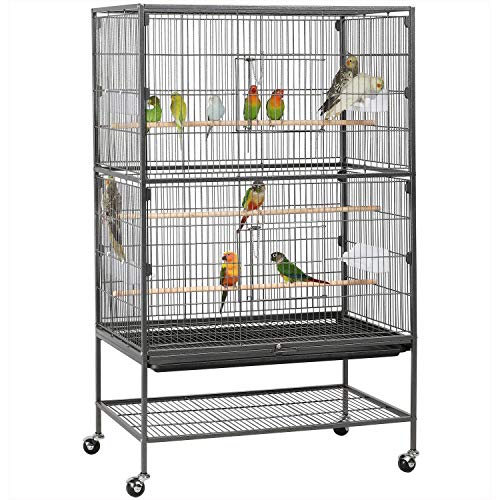
Before you even try to interact, your parakeet needs to feel safe in its home. A cage that is too small, too open, or placed in a high-traffic area will keep your bird on edge for weeks. Make sure the cage is positioned with one side against a wall so the bird never feels exposed from all angles. Cover the top and part of the back with a light cloth to create a safe zone. If you are starting fresh, choosing a spacious and well-designed home from the start can make a huge difference. Check out the Best Parakeet Cages 2026: Wide Designs with Safe Spacing for models that give shy birds plenty of room to retreat while still allowing you to approach slowly. Inside the cage, provide at least two sturdy perches at different heights so your bird can choose its comfort level. Avoid placing perches directly over food and water bowls, as birds dislike feeling trapped while eating.
Step Two: The First Week, Just Be a Quiet Presence
For the first five to seven days, do not try to touch your parakeet. Do not put your hand in the cage. Your only job is to sit next to the cage for 10 to 15 minutes, two to three times a day. Read a book out loud in a low, calm voice, or just hum. Move slowly when you enter and leave the room. If your bird flutters or freezes, you are moving too fast. Back off a little, sit farther away, or shorten the session. The goal is for the parakeet to realize that your presence does not mean danger. Once you see your bird preening, eating, or chirping while you are nearby, you are ready for the next step.
Parakeets have a field of vision of nearly 340 degrees, but they have a blind spot directly behind their head. Always approach from the front or side so your bird can see you coming. Sneaking up from behind will only make fear worse.
Step Three: Introduce Millet as a Bridge
Millet spray is the single most powerful tool for taming a shy parakeet. It is like bird candy, and most parakeets cannot resist it. Start by holding a long spray of millet through the cage bars, as far from the bird as possible while still being inside the cage. Hold it still. Do not wave it. The bird will likely freeze at first. Just wait. Eventually, curiosity will win. The first time your parakeet takes a single seed from the millet while you are holding it, that is a victory. Over several days, gradually move the millet closer to the cage door. Once the bird eats comfortably from your hand through the bars, you can open the door and offer the millet just inside the entrance. Never pull the millet away if the bird hesitates. Let it come to you. For a variety of healthy options to keep your bird motivated, browse the Parakeet Treats Your Bird Will Love: 5 Top Picks for Every Budget to find sprays and seed mixes that work well for training.
Step Four: The Hand-in-Cage Milestone
This is the moment most owners dread. Once your parakeet eats millet from your fingers at the cage door, you can slowly rest your hand flat on the cage floor, palm up, with millet resting in your palm. Do not curl your fingers. Do not move. The bird may hop onto your wrist to reach the millet, or it may just eat from your palm while keeping its feet on the perch. Either is fine. If the bird steps onto your hand, even for a second, that is a huge win. Keep sessions short, no more than five minutes, and end on a positive note before the bird gets scared. If your parakeet refuses to step up, do not chase it around the cage. Just close the door and try again later. Some birds take weeks to trust a hand inside their space. That is normal.
Trust is not built in a day. It is built in the quiet moments when you do nothing but sit still and let the bird decide you are safe.
Step Five: Teach the Step-Up Command
Once your parakeet is comfortable eating from your hand inside the cage, you can begin step-up training. Use a perch first, not your finger, if the bird is still nervous. Hold a perch (a simple wooden dowel works) horizontally against the bird’s lower chest, just above the feet, and gently apply light pressure. Most parakeets will instinctively step onto the perch. Say “step up” in a cheerful voice each time. Reward with millet immediately. After a few days of perch training, switch to your finger. Hold your index finger flat and level, press gently against the bird’s belly, and give the command. If the bird bites, do not yank away. A bite from a scared parakeet rarely breaks skin. Just hold still and wait. If the bird is too scared to step up, go back to the perch for a few more days. Having the right perches in the cage can also encourage natural stepping behavior. Look at the Top 5 Bird Perches for options that vary in texture and diameter, which helps keep your bird’s feet healthy and makes perching more comfortable during training.
Step Six: Out-of-Cage Time and Ongoing Bonding
Once your parakeet steps up reliably inside the cage, you can try bringing it out. Make sure the room is bird-proofed: windows covered, doors closed, ceiling fans off, and no other pets. Start by stepping the bird up and simply holding it near your chest for a minute or two, then return it to the cage. Do not force it to stay out. Gradually increase the time. Some shy birds will bond faster once they realize that outside the cage, you are their safe perch. Let the bird explore a Top 5 Bird Stands placed near you while you work or watch TV. This builds confidence and associates you with positive, low-pressure experiences. Always end training sessions with a treat and a calm voice. Over weeks, your parakeet will begin to seek you out, chirp when you enter the room, and eventually hop onto your shoulder without hesitation. That is the reward for all your patience.
If your parakeet suddenly stops eating, becomes lethargic, or shows signs of illness like fluffed feathers or tail bobbing, stop training and consult an avian vet immediately. A sick bird cannot learn, and stress can worsen health issues. Always prioritize your bird’s well-being over taming progress.