You have probably seen those lush, green underwater landscapes on social media and thought, “I want that in my living room.” Good news: you can build a planted aquarium without a biology degree or a second mortgage. The secret is starting with the right foundation and letting nature do most of the work. Whether you are a first-time fishkeeper or a seasoned aquarist looking to go green, this guide will walk you through the real steps to set up a planted tank that stays healthy and beautiful.
1. Choose the Right Tank and Stand
Size matters more than you might think. A 20-gallon long tank is a fantastic starting point because it offers more surface area for gas exchange and gives plants room to spread. Avoid anything smaller than 10 gallons for your first planted tank, as smaller volumes are harder to keep stable. Place the tank on a level, sturdy stand that can support the full weight (water weighs about 8.3 pounds per gallon). A wobbly stand is a disaster waiting to happen.
2. Pick the Best Substrate for Plant Growth
Your plants need nutrients at their roots. Regular gravel will not cut it for most rooted plants. Use a nutrient-rich aquasoil like ADA Amazonia or Fluval Stratum. These soils buffer pH, provide iron and trace elements, and help root feeders like Cryptocoryne and Vallisneria thrive. Cap the aquasoil with a thin layer of fine gravel or sand if you want a cleaner look, but keep it shallow so roots can still breathe. If you are using inert sand, add root tabs every few inches to feed heavy root feeders.
3. Install Filtration and Heating
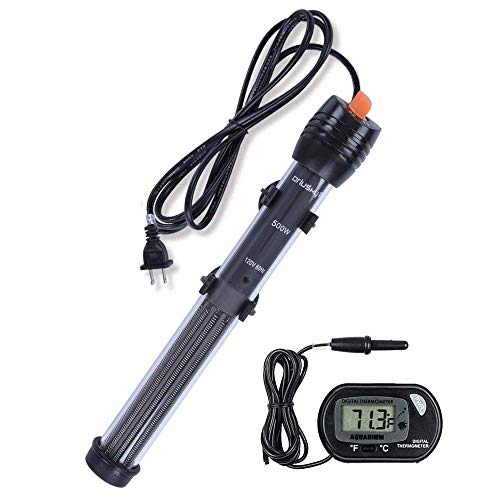
Good filtration keeps water clear and removes waste before it turns into ammonia. A canister filter is ideal for planted tanks because it offers high flow and media space without taking up room inside the tank. For media, consider using a high-quality aquarium filter sponge to trap debris while housing beneficial bacteria. You will also need a reliable heater to keep the water between 72 and 78 degrees Fahrenheit for most tropical plants and fish. Check out the Top 5 Aquarium Heaters to find a model with a built-in thermostat that keeps temperature steady. A digital thermometer is a must for monitoring, and you can see Which Aquarium Digital Thermometer Really Works for accurate readings.
Place your heater near the filter outflow so warm water circulates evenly. Cold spots can stress plants and fish alike.
4. Set Up Lighting and CO2
Light is the engine of a planted tank. Low-tech tanks (no injected CO2) need moderate light for 6 to 8 hours a day. Use a LED light designed for planted aquariums, like a Finnex or Fluval Plant 3.0. Too much light without CO2 leads to algae, so stick with a timer and start at 6 hours. For high-tech tanks, add a pressurized CO2 system to boost growth and reduce algae. If you want to automate your lighting and CO2 schedule, a smart controller can simplify everything. Check the Top 5 Aquarium Controllers to find one that manages both lighting and CO2 dosing.
5. Plant Your Aquarium the Right Way
Start with easy, hardy plants that do not need high light or CO2. Java fern, Anubias, and Hornwort are nearly bulletproof. Attach Java fern and Anubias to driftwood or rocks using super glue gel or thread, never bury their rhizomes or they will rot. For stem plants like Water Wisteria or Rotala, trim the stems and plant them an inch apart in the substrate. Use tweezers to push the stems deep enough so they do not float away. Add a few floating plants like Duckweed or Frogbit to absorb excess nutrients and dim the light for lower plants.
“A planted aquarium is not a decoration, it is a living ecosystem. Give it patience, and it will give you peace.”
6. Cycle the Tank and Manage Nutrients
Before adding fish, you must cycle the tank to build beneficial bacteria that convert ammonia into nitrates. This takes 4 to 8 weeks. Add a pinch of fish food or pure ammonia daily to feed the cycle. Test water weekly with a liquid test kit. Once ammonia and nitrite hit zero and you see nitrates, the cycle is done. During cycling, plants will help absorb nitrates, but you may still need a best aquarium nitrate remover if levels climb above 40 ppm. After cycling, dose a liquid fertilizer like Seachem Flourish once a week for trace elements. Watch your plants: yellowing leaves often mean iron deficiency, while stunted growth can signal low CO2 or light.
7. Maintain Your Planted Aquarium
Weekly maintenance keeps everything balanced. Change 20 to 30 percent of the water every week, and vacuum the substrate gently to remove mulm. Trim dead or yellowing leaves with scissors. Clean the glass with an algae scraper. Check your filter every month and rinse the sponge in old tank water (never tap water, which kills bacteria). If you notice algae blooms, reduce light duration or add a UV clarifier to clear the water. A stable routine is the best medicine for a planted tank.