You know the scene: you’re on a walk, and your dog locks onto a discarded chicken bone or a mysterious pile on the sidewalk. You say ‘leave it,’ and they look at you like you’re speaking a foreign language. Teaching a stubborn dog this command is less about force and more about showing them that ignoring something is actually more rewarding than grabbing it. Let’s get into a proven, step-by-step approach that works with even the most determined pups.
Start With High-Value Rewards and a Closed Fist
Begin in a quiet room with zero distractions. Hold a low-value treat in your closed fist and let your dog sniff, lick, or paw at it. The moment they pull their nose away or stop trying, mark that behavior with a clear ‘yes’ or a click, then reward them with a much better treat from your other hand. Repeat this until your dog understands that backing off the fist earns them something better. This builds the core idea: ‘leave it’ means good things come from you, not from the object. For a breed that’s particularly food-driven and strong-willed, like a Cane Corso, you might need extra patience. If you’re curious about their temperament, check out our guide on Are Cane Corsos Good Family Dogs to see if their stubborn streak matches your training style.
Progress to an Open Palm
Once your dog is reliably ignoring your closed fist, move to an open palm with a treat in the center. Cover it with your hand if they lunge. The instant they hesitate or look at you instead of the treat, mark and reward from your other hand. If they go for the treat, just close your hand and wait. No scolding, just a reset. Stubborn dogs learn fastest when they realize their own choices lead to the reward. Repeat until they can look at the treat in your open palm, then look up at you, waiting for the better deal. This step teaches impulse control, which is a game-changer for any dog, especially smart, energetic breeds like Australian Shepherds. For more on their personality, read Are Australian Shepherds Good Family Dogs to understand their drive and how it affects training.
Use your dog’s regular kibble as the ‘distraction’ item and a piece of boiled chicken or cheese as the reward. This makes the lesson clear: ignoring the boring stuff gets them the good stuff. For a stubborn dog, the reward must be significantly better than the item you’re asking them to leave.
Add the Verbal Cue and Duration
Now that your dog understands the action, add the words ‘leave it’ right before you present the treat in your open palm. Say it once, calmly. Then present the treat. If they wait, mark and reward. Gradually increase the time they must wait before you reward them. Start with one second, then two, then five. If they break early, go back to a shorter duration. Stubborn dogs often test boundaries, so keep sessions short (five minutes max) and end on a success. This builds reliability. If your dog is a fast eater who tends to inhale things off the ground, using a Slow Feed Dog Bowls for Australian Shepherds can help slow them down at mealtime, which reinforces the patience they need for ‘leave it’.
Move to the Floor and Real Objects
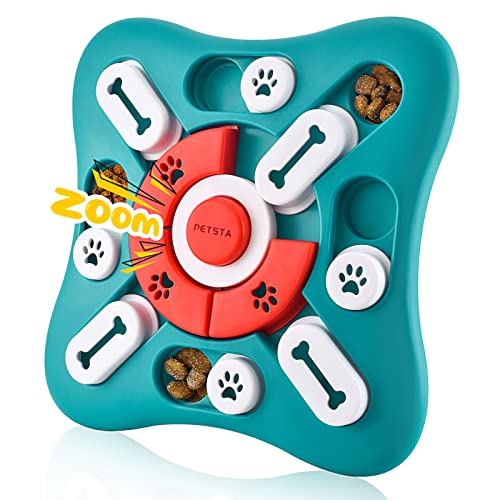
Place a low-value treat on the floor, covering it with your hand or foot. Say ‘leave it.’ When your dog looks at you instead of the treat, mark and reward. Gradually uncover the treat, but keep your hand nearby. If they go for it, cover it again. The goal is for them to see the item on the floor, then choose to look at you. Once they reliably do this with treats, try with a toy, a piece of kibble, or even a safe household item like a remote. For a stubborn dog, this is where the real work begins because the environment is more tempting. If your dog is especially toy-obsessed, using a Puzzle Toys for Australian Shepherds: Top Picks for Smart Dogs can channel that drive into a constructive activity, making ‘leave it’ easier to teach because they learn that not grabbing something leads to a fun puzzle later.
“The moment your dog chooses to look at you instead of the thing on the floor, you’ve won more than a command, you’ve earned their trust.”
Practice in the Real World With Distance and Distractions
Take the training outside to your yard or a quiet sidewalk. Start with a low-value item like a piece of kibble on the ground, and stand close. Gradually increase the distance between you and the item, and add mild distractions like a person walking by or a gentle breeze. Always use a leash for safety. If your dog fails, simply reduce the difficulty and try again. Stubborn dogs need repetition across different settings to generalize the command. For high-energy breeds, a good diet supports focus during training. If you have a Cane Corso, check out 5 Best Dog Foods for Cane Corsos: High-Protein Picks to ensure their nutrition supports their energy levels and concentration.
Troubleshooting Common Stubborn Dog Challenges
If your dog ignores the ‘leave it’ cue entirely, you may be moving too fast. Go back to the closed fist step and ensure they are 90% reliable before progressing. If they grab the item and run, never chase, just walk away and call them in a happy tone. Chasing turns it into a game. If they seem bored, switch up your reward to something irresistible like freeze-dried liver or a squeaky toy. For dogs that resource guard, consult a professional trainer or your vet, as this is a safety issue. Remember, stubborn dogs often have high intelligence and a strong will, which are assets once channeled correctly. They need to see that listening to you is always the best option.