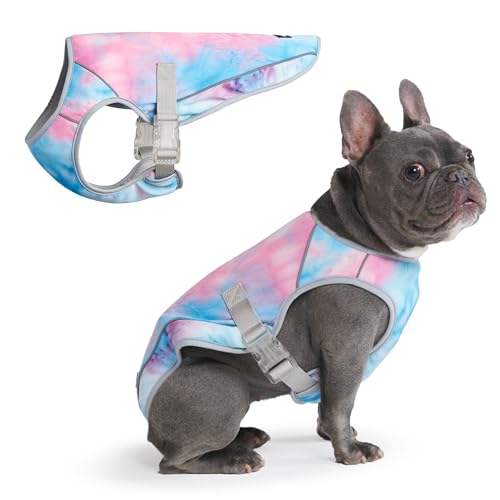
Quick answer
Our top pick is the Ruffwear Swamp Cooler, which uses evaporative cooling and stays secure during swimming. For budget-conscious owners, the Kurgo Surf N Turf Cooling Vest offers similar performance at a lower price. The Rabbitgoo Cooling Vest is a great choice for large dogs needing extended coverage.
What to consider for Dog Cooling Vest For Swimming
When choosing a cooling vest for swimming, focus on materials that activate with water (evaporative cooling) and a snug fit that won’t shift during movement. Look for quick-dry fabrics and reflective trim for visibility. The vest should allow full range of motion for paddling and not restrict the chest or shoulders. Consider the water temperature: evaporative vests work best in hot, dry conditions, not in humid or cold water.
What to look for in a gear item (harness, collar, leash or muzzle)
Correct fit and sizing: measure your dog’s girth and neck, and check the manufacturer’s size chart. Durable hardware and materials: look for rust-resistant buckles and reinforced stitching. Safety features: escape-resistant design with multiple adjustment points, no-choke construction, and reflective elements. Comfort and padding: soft mesh lining and padded edges prevent chafing. No-pull design: a front clip can help discourage pulling without causing discomfort.
How we chose these picks
- Evaluated cooling technology (evaporative vs. gel vs. phase change) for swimming suitability.
- Assessed fit and adjustability for different body shapes and sizes.
- Checked materials for durability, quick-drying, and UV protection.
- Considered safety features like reflective strips and escape-proof buckles.
- Reviewed customer feedback on sizing accuracy and performance in water.
- Prioritized vests that allow full freedom of movement for swimming.
- Compared price points to offer options for various budgets.
- Never ranked a product higher just because it pays a commission.
What to avoid
- Ill-fitting sizes: a loose vest can cause chafing or slip off in water; a tight one restricts breathing.
- Flimsy clips that fail on strong dogs: opt for metal or heavy-duty plastic buckles.
- Aversive tools used without professional guidance: avoid pinch or prong collars unless directed by a trainer.
- Retractable leashes near traffic: they offer limited control and can cause injury.
For more guidance, explore our dog guides, dog care products, and dog health resources.