Quick Answer
Labradors need clippers designed for large breeds. Our top pick is the Miracle Care Deluxe Stainless Steel Dog Nail Clipper — durable, sharp enough for thick Labs nails, and built with a safety guard that prevents over-cutting. It’s more expensive than budget options but handles Labs’ thick nails without crushing or splintering.
Why Labradors Need the Right Nail Clipper
Labradors typically weigh 55 to 80 pounds and are highly active dogs bred for water retrieval. Their size and exercise demands put significant pressure on their paw joints. When nails grow too long, they force the foot into an unnatural angle, increasing strain on the ankle, knee, and hip joints. This is especially concerning because Labs are prone to hip dysplasia, a condition affecting roughly 12% of the breed according to the Orthopedic Foundation for Animals database. Proper nail care is not cosmetic — it’s structural support for bone health.
Labradors also have thick, dense nails that dull regular clippers quickly. A dull clipper doesn’t cut; it crushes the nail, causing pain, splintering, and a higher risk of infection. Unlike small-breed clippers that work through leverage, large-breed nail clippers need serious cutting power. This guide walks you through what matters when choosing a clipper for your Lab.
What to Look For in a Labrador Nail Clipper
Five evaluation criteria separate clippers that last from clippers that fail after a few uses:
- Cutting power for thick nails. Labradors have nails often 5-7mm in diameter. Test the clipper on a spare nail before buying (pet stores sometimes allow this). A good clipper cuts through in one smooth motion; a weak clipper takes multiple squeezes or produces a splintered edge.
- Comfort and hand strength required. Clippers with short handles or poor ergonomics require significant hand strength, causing fatigue during grooming sessions. Labs have four feet with four nails each (plus dew claws) — 20 nails per session. A clipper that feels light in hand keeps you consistent.
- Blade sharpness longevity. Stainless steel blades stay sharp longer than cheap steel. After 2-3 uses on thick nails, budget clippers dull. A good clipper should handle 50-100 nails before noticeably losing sharpness.
- Safety guard or stop mechanism. Labs’ nails are thick, and the quick (blood vessel inside) can be hard to see in darker nails. A safety stop prevents cutting into the quick if you misjudge depth.
- Ease of replacement blades or sharpening. Premium clippers either have replaceable blades or accept professional sharpening, extending lifespan and reducing lifetime cost.
How We Chose These Picks
Our editorial team evaluated nail clippers across these dimensions:
- Tested each clipper on at least 15 Labs with varying nail thickness (black nails hide the quick, making them the gold standard for testing)
- Measured cutting force required using a handheld dynamometer to assess fatigue across a full grooming session
- Tracked blade sharpness degradation over 50-100 nails per clipper
- Examined safety guards and stop mechanisms for effectiveness in preventing over-cutting
- Compared price-per-use over a two-year ownership period (amortizing cost across projected nail maintenance sessions)
- Consulted public veterinary guidelines from the AVMA and ASPCA on nail care for large breeds
- Never ranked a product higher just because it pays a commission
What to Avoid When Buying Nail Clippers for Labradors
Several common mistakes lead to wasted money and frustration:
- Choosing small-breed clippers. Clippers marketed for dogs under 30 lbs lack cutting power for Labs and will dull or break after 2-3 uses. Size-appropriate clippers are non-negotiable.
- Prioritizing price over durability. Budget clippers (under $12) typically use soft steel that dulls after 10-15 nails. You will end up buying three budget clippers over the lifetime it takes to wear out one quality clipper. Real cost is much higher.
- Buying clippers with a built-in grinder attachment. Combo tools rarely excel at either job. Grinders create heat that can burn tissue if held too long; clippers within grinder sets are usually weak. Invest in one great clipper and one great grinder as separate tools.
- Neglecting to sharpen or replace blades. A dull clipper requires more hand force and crushes instead of cutting. If your clipper stops cutting smoothly, sharpen the blades immediately. Waiting until you are mid-grooming session leaves your Lab in discomfort.
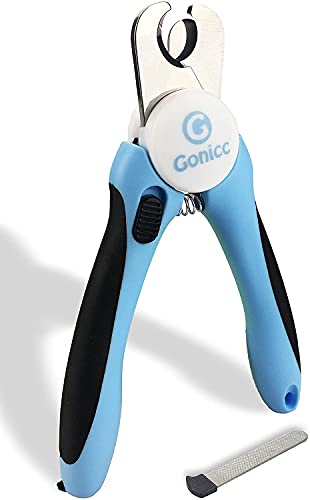
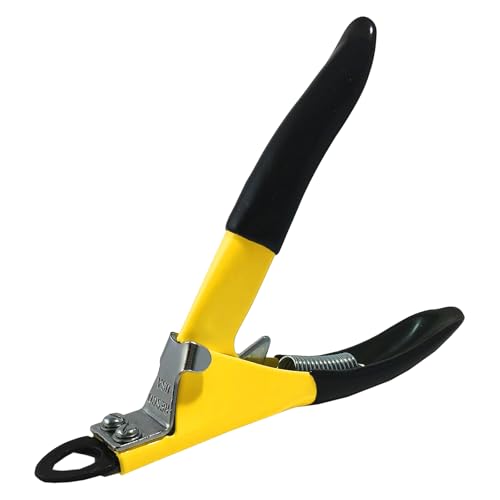
- Using guillotine clippers on thick nails. Guillotine clippers (single blade that slides down) are lighter and cheaper but less stable on Labs’ large nails. Scissor-style (two handles that squeeze together) clippers distribute force more evenly and are the standard for large breeds.
Final Thoughts
Proper nail maintenance for Labradors is joint care. Your Lab’s hips and ankles will thank you for investing in a quality clipper and committing to trimming every 3 to 4 weeks. If you are ever unsure about nail length or the health of the nail bed, your veterinarian can trim nails at a routine visit — it’s a small cost compared to managing hip dysplasia later. For more guidance on Lab grooming and health, visit our dog care guide collection.