Quick answer
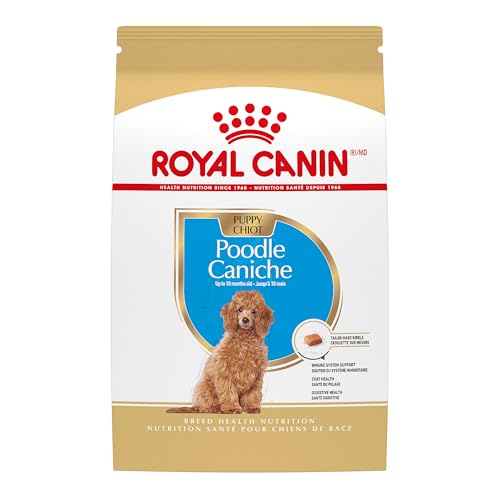
For most Poodles, our top overall pick is Royal Canin Poodle Adult Dry Dog Food, a breed-specific small to medium formula built around skin and coat support with a kibble shape designed for the Poodle muzzle. It is a grain-inclusive recipe, which we treat as the safer default. If your Poodle has a touchy stomach, Hill’s Science Diet Sensitive Stomach and Skin Small Bites is the better fit. For a Standard Poodle, lean toward Purina Pro Plan Large Breed for its joint-supporting profile and larger frame calorie balance. Budget-focused owners should look at Diamond Naturals Small Breed Adult, and Poodle puppies are served well by Royal Canin Poodle Puppy.
Why Poodles need the right food
The Poodle is really three dogs in one breed standard. Toy Poodles weigh roughly 4 to 6 pounds, Miniatures around 10 to 15 pounds, and Standards often 40 to 70 pounds, so size class is the first thing to get right. Small and Toy Poodles burn a lot of energy relative to body mass and can be prone to low blood sugar if meals are skipped, while Standards carry more joint load and benefit from controlled growth and weight.
Poodles are intelligent and athletic with moderate to high energy, so calorie density matters. The breed’s dense, curly, low-shedding coat depends on adequate protein and balanced omega-3 and omega-6 fatty acids to stay soft and healthy, and skin sensitivity is a common owner complaint. Poodles can also be predisposed to certain issues that vets see frequently, including progressive retinal atrophy, patellar luxation and hip concerns, Addison’s disease, bloat in Standards, and dental tartar in the Toy and Miniature sizes because of crowded small jaws. Food cannot prevent genetic disease, but appropriate kibble size, steady calories, and coat-supporting nutrients all help the day to day.
What to look for in a Poodle food
Start with a named animal protein as the first ingredient and an AAFCO statement confirming the food is complete and balanced for your Poodle’s life stage. For adult Poodles, protein in the range of roughly 22 to 28 percent and moderate fat is a practical starting point, though activity and body condition matter more than one fixed number. Look for omega fatty acid sources such as fish oil or flaxseed to support skin and the curly coat. For Toy and Miniature Poodles, choose a small-breed or small-bite kibble that is easier to chew and may help reduce tartar. For Standard Poodles, a large-breed formula with controlled calcium and joint support ingredients like glucosamine is sensible. We treat grain-inclusive diets as the safer default unless your vet advises otherwise.
Find the right food for your dog’s needs
The picks above suit a healthy adult Poodle. For a specific life stage or health need, use these focused guides.
- Puppies: see our guide to the best Poodle food for puppies.
- Seniors: see our guide to the best Poodle food for senior dogs.
- Sensitive stomachs: see our guide to the best Poodle food for sensitive stomachs.
- Skin allergies: see our guide to the best Poodle food for skin allergies.
Which food type is best?
Dry, wet, fresh, raw and dehydrated foods can all work for a Poodle. The right one depends on your budget, your dog’s preferences and any health needs.
- Dry: most economical and convenient, and the crunch helps clean teeth.
- Wet: higher moisture and often more palatable, useful for fussy eaters or as a topper.
- Fresh and gently cooked: minimally processed with recognisable ingredients, at a higher cost.
- Raw and freeze-dried raw: high protein and minimally processed; handle safely and ask your vet first.
Getting the best value
The cheapest bag is not always the best value. A quality food that keeps your Poodle lean, with a healthy coat and firm stools, often means fewer vet visits. Feed to a healthy body condition rather than the bag maximum, and choose a recipe built around quality animal protein.
How we chose these foods
- We compared publicly available ingredient lists and guaranteed analysis panels rather than relying on marketing claims.
- We confirmed each food carries an AAFCO complete and balanced statement for the relevant life stage.
- We matched kibble size and calorie density to Poodle size classes, from Toy through Standard.
- We favored named animal proteins in the first ingredient slot and clear omega fatty acid sources for skin and coat.
- We checked each brand against the FDA animal food recall database for major unresolved safety issues.
- We prioritized grain-inclusive recipes as a default and flagged grain-free options with the current FDA DCM context.
- We weighed real owner-reported trade-offs, such as palatability or price, alongside the nutrition data.
- Never ranked a food higher just because it pays a commission.
Foods to avoid or feed with care
- Grain-free or legume-heavy formulas fed as the sole diet without veterinary guidance. The FDA has investigated reports of canine DCM in dogs eating certain diets, especially some grain-free or legume-heavy formulas, and is still gathering information; we treat grain-inclusive diets as the safer default unless your vet advises otherwise.
- Foods with vague unnamed meat sources or no AAFCO complete and balanced statement.
- Large dense kibble for Toy and Miniature Poodles, which can be hard to chew and may discourage eating.
- Calorie-dense free-feeding for less active Poodles, since the breed gains weight easily and excess weight strains joints.
- Frequent abrupt diet switches, which can upset a Poodle’s sometimes sensitive stomach. Transition over about a week.
- Generic adult food for fast-growing Standard Poodle puppies, which benefit from a large-breed puppy or controlled-calcium formula.
For more breed and feeding help, browse our dog food guides, our dog nutrition library, and our dog health articles.