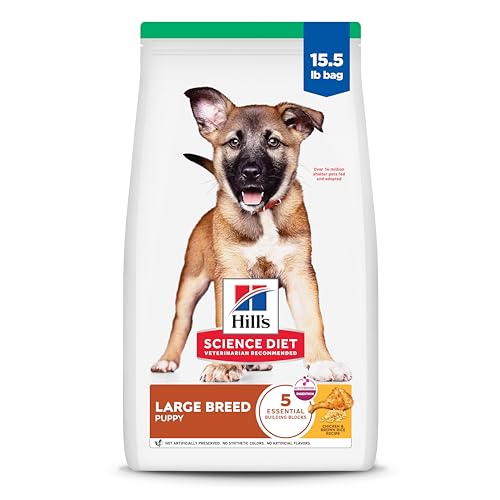
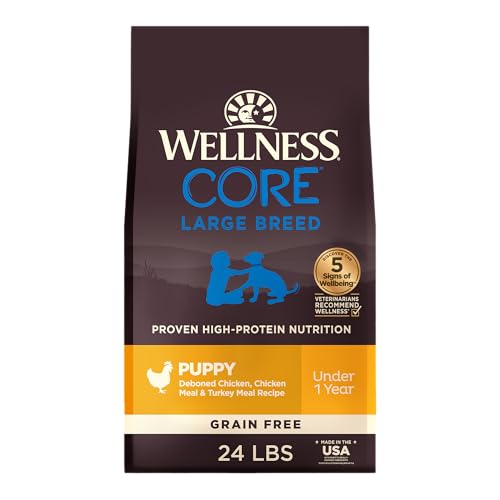
Quick answer
Our top pick is Purina Pro Plan Focus Large Breed Puppy Sensitive Skin & Stomach Salmon & Rice Formula. It combines easily digestible salmon with prebiotic fiber and guaranteed live probiotics to support digestive health. For tighter budgets, Diamond Naturals Large Breed Puppy Lamb Meal & Rice Formula offers excellent nutrition at a lower price. If your puppy needs a grain-free option (always consult your vet first), Wellness CORE Grain-Free Large Breed Puppy is a solid choice.
What to consider for Large Breed Dog Food For Puppies With Sensitive Stomachs
Large breed puppies grow rapidly and need carefully balanced nutrition to avoid joint problems. When a puppy also has a sensitive stomach, you need a food that is easily digestible and gentle on the gut. Key considerations include a single, novel protein source (like salmon or lamb), limited ingredients to reduce triggers, and added prebiotics or probiotics to support a healthy microbiome. Also, ensure the food meets AAFCO nutrient profiles for large breed puppies, with controlled calcium (around 1.0% to 1.5% on a dry matter basis) and moderate fat to support steady growth without excess weight gain. Avoid foods with corn, wheat, soy, artificial additives, or unnamed meat meals, which can be harder to digest.
What to look for in a dog food
First, look for an AAFCO statement confirming the food is complete and balanced for growth or all life stages, specifically for large breed puppies (some foods have a separate large breed formula). The first ingredient should be a named meat or meat meal (e.g., salmon, lamb meal) rather than a generic by-product. Protein content should be around 22% to 32% on a dry matter basis, fat around 12% to 18%, and fiber around 3% to 5%. Calcium should be between 1.0% and 1.5% to support proper bone development. Look for added sources of glucosamine and chondroitin for joint health, and omega-3 fatty acids (from fish oil or flaxseed) for skin and coat health. For sensitive stomachs, prebiotics like chicory root or inulin and probiotics (live microorganisms) are beneficial. Avoid foods with excessive legumes or potatoes, which can be harder to digest and are under FDA investigation regarding DCM.
How we chose these picks
- Evaluated ingredient lists for named animal protein as the first ingredient and limited use of fillers.
- Verified that each formula meets AAFCO nutrient profiles for large breed puppies.
- Checked for added prebiotics, probiotics, or digestive enzymes to support sensitive stomachs.
- Prioritized brands with a history of feeding-data reviews or research backing (e.g., Purina, Hill’s, Royal Canin).
- Considered customer feedback on palatability and digestive tolerance for large breed puppies.
- Selected a range of price points to suit different budgets.
- Included both grain-inclusive and grain-free options (with a note on FDA DCM investigation).
- Never ranked a product higher just because it pays a commission.
What to avoid
- Avoid foods where the only protein source is an unnamed “meat meal” or “poultry meal” without specifying the animal.
- Avoid defaulting to grain-free or legume-heavy recipes without veterinary guidance, as the FDA is investigating a potential link between these diets and canine dilated cardiomyopathy (DCM). Grain-inclusive is generally safer unless your vet advises otherwise.
- Avoid all-life-stages foods for a large breed puppy; they may not have the right calcium-to-phosphorus ratio for controlled growth.
- Avoid abruptly switching foods; transition over 7 to 10 days by mixing increasing amounts of the new food with the old to prevent digestive upset.
For more guidance, check out our dog guides and explore dog food and dog nutrition articles.