A rear-leg wheelchair can give a dog with hind-limb weakness real freedom to move, sniff, and stay active. We hear from owners facing this decision after an injury, surgery, or a diagnosis like degenerative myelopathy, and the questions are always the same: will it fit, will it be stable, and is it easy to adjust. In our evaluation we focused on those exact points using published specs and owner feedback, not on marketing. Before anything else, we recommend working with your veterinarian. A vet confirms the cart is appropriate for your dog’s condition, takes the right measurements, and checks that the spine and remaining limbs are supported correctly. What we like in a wheelchair is broad adjustability across length, height, and width, a lightweight frame the dog can actually push, and a stable wheel base. Below are our picks and the fitting steps we trust so the cart helps rather than strains.
Best Pet Wheelchair (2026): 5 Top Picks Reviewed
We compared adjustable rear-leg dog wheelchairs against mobility-support specs and aggregated owner feedback to find frames that fit, roll smoothly, and adjust as a dog heals or ages. Our picks balance lightweight build, adjustability, and stable support. Always work with your veterinarian before fi
Some links below are affiliate links. If you buy through them we may earn a small commission at no extra cost to you. Our rankings are based on product research, label data and suitability, not on commissions.
 ★ Top Pick: LetPetRun Adjustable Dog Wheelchair for Back Legs M…
Quick Comparison
| Product | Best For | |
|---|---|---|
| LetPetRun Adjustable Dog Wheelchair for Back … | Best Overall | Check price → |
| Adjustable Dog Wheelchair for Back Legs Mobil… | Best for Custom Fit | Check price → |
| Nasjac Dog Wheelchair for Back Legs - Lightwe… | Runner-Up | Check price → |
| VEVOR Dog Wheelchair for Back Legs, Adjustabl… | Best Heavy-Duty | Check price → |
Adjustability is what makes a wheelchair last. A dog's body changes through recovery or aging, and a cart that adjusts on length, height, and width keeps fitting correctly instead of becoming unusable in a month.
Types Explained
Fully adjustable rear-support cart
Two-wheel cart with independent length, height, and width adjustment for hind-limb support.
Best for: Most rear-leg weakness cases needing a precise, changeable fitLightweight portable wheelchair
A reduced-weight frame, sometimes with reflective accents, built for easy pushing.
Best for: Smaller dogs and owners prioritizing low frame weightHeavy-duty support frame
A sturdier build aimed at durability and larger or more active dogs.
Best for: Bigger breeds and dogs using the cart for longer daily sessionsTop 4 Picks
LetPetRun Adjustable Dog Wheelchair for Back Legs Mobility Support Lightweight Pet Wheelchair for Disabled Hind Legs Walking Stable Dog Cart for Pets, XX-Small White
We like that the LetPetRun cart pairs broad rear-leg adjustability with a lightweight frame the dog can push without strain. In our evaluation the balance of support and easy fitting made it our most well-rounded pick.
Adjustable Dog Wheelchair for Back Legs Mobility Support Lightweight Pet Wheelchair for Disabled Hind Legs Walking Stable Dog Cart for Pets, Mini White
We rate this adjustable cart highly for its multi-point fit across length, height, and width. We like how the wide adjustment range suits dogs whose measurements fall between standard sizes.
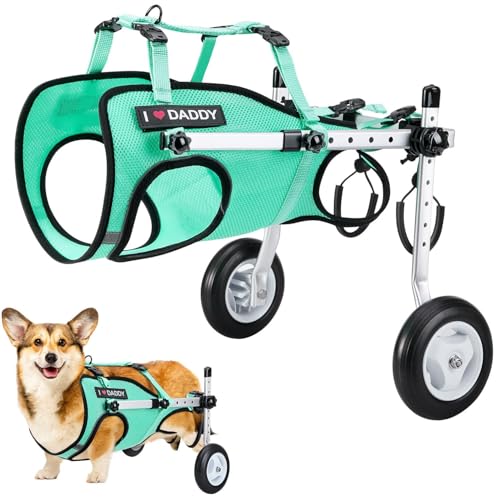
Nasjac Dog Wheelchair for Back Legs - Lightweight Portable Wheelchair with Reflective Stripes, Adjustable Pet Wheelchair Cart for Senior, Arthritis, Paralyzed, Injured, or Disabled Dogs (GR, M)
We picked the Nasjac wheelchair for its lightweight, portable build with reflective accents for evening visibility. We found it a strong alternative, sitting just behind our top pick on overall adjustability.

VEVOR Dog Wheelchair for Back Legs, Adjustable 2 Wheels Pet Wheelchair, Lightweight Dog Cart with Shock-Absorbing Wheels, Mobility Support Wheel Chair for Disabled Injured Dogs up to 22lbs, Small
We chose the VEVOR two-wheel cart for its sturdier frame aimed at durability. We like the adjustable design for larger dogs that need a robust support structure for daily use.
Key Buying Factors
Veterinary fitting
A vet confirms the wheelchair suits your dog's diagnosis and takes accurate measurements. This step prevents a poor fit that could strain the spine or remaining limbs.
Multi-point adjustability
Look for independent length, height, and width adjustment. Dogs change as they heal or age, and a cart that adjusts on all three axes keeps fitting correctly over time.
Frame weight
A lighter frame is easier for a weakened dog to push. Heavy carts tire the dog faster, so a lightweight aluminum-style frame helps sustained movement.
Wheel stability and quality
Smooth, well-set wheels roll cleanly over grass and pavement without tipping. Reflective accents add visibility for evening use on some models.
Padded contact points
Padding at the harness, saddle, and leg supports prevents rubbing during longer sessions. Pressure points are a common comfort complaint, so soft contact areas matter.
Ease of on and off
You will put the cart on and take it off daily. A design that loads quickly with clear straps reduces stress for both you and the dog.
Care, Cost and Maintenance
Start with short sessions
Introduce the wheelchair in brief, calm sessions on flat ground with treats. Gradual exposure lets the dog learn balance and build stamina without exhaustion.
Check skin at contact points
After each use, inspect the harness, saddle, and leg areas for redness or rubbing. Catching pressure spots early prevents sores and keeps the cart comfortable.
Re-measure as your dog changes
Recovery, weight shifts, or muscle changes alter the fit. Re-check the adjustments regularly and confirm with your vet that the support is still correct.
Take your dog's measurements with your veterinarian and write them down before ordering. The single biggest fit complaint in this category comes from guessed measurements, and a vet-checked set of numbers prevents it.