Quick answer
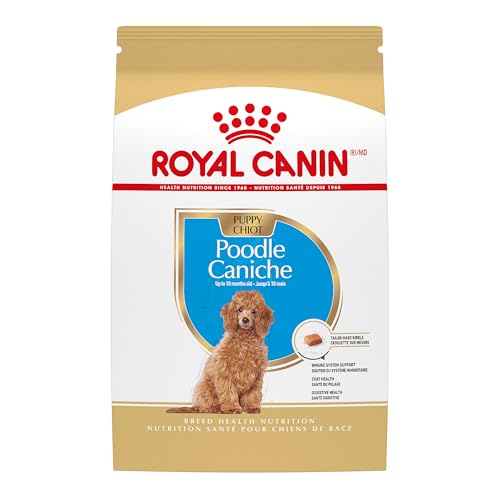
For most owners, our top overall pick is Royal Canin Poodle Puppy Dry Dog Food, a breed targeted recipe formulated to be complete and balanced for growth that suits the small to medium frame of Toy and Miniature Poodles. If you have a Standard Poodle, which is a large breed, we suggest Hill’s Science Diet Puppy Large Breed instead because it controls calcium and energy for slower, steadier bone growth. On a tight budget, Diamond Naturals Small Breed Puppy covers the basics well, while Purina Pro Plan Puppy Sensitive Skin and Stomach is our choice for puppies with a touchy gut, and Wellness Complete Health Puppy is a solid grain inclusive everyday option. Always confirm the right pick with your veterinarian, especially if your puppy has a medical condition.
What to consider for Puppy Food For Poodle
Poodles come in three sizes, and that single fact drives almost every feeding decision. A Toy Poodle may reach adult weight in about 8 to 10 months, while a Standard Poodle keeps growing for roughly 12 to 18 months and is classed as a large breed. That difference matters because large breed puppies need controlled calcium and energy to lower the risk of developmental bone and joint problems, so a Standard Poodle should not eat a generic or small breed puppy food.
Toy and Miniature Poodles have tiny mouths and can be prone to low blood sugar when very young, so they often do better with small, calorie appropriate kibble fed in several meals a day. Poodles of all sizes are also known for sensitive skin and coats that benefit from balanced omega fatty acids, and many owners report finicky eating, so palatability and digestibility count. Dental crowding in the smaller varieties means kibble size and chewing matter too. None of this replaces individual advice, so talk with your veterinarian about your specific puppy.
What to look for in a dog food
First, look for an AAFCO complete and balanced statement for the correct life stage. For a Toy or Miniature Poodle puppy you want a statement for growth or for all life stages. For a Standard Poodle puppy, look specifically for a statement that says it is suitable for growth including large size dogs, since that signals controlled calcium.
Next, check that a named meat, such as chicken, lamb, or salmon, is the first ingredient rather than a vague unnamed source. Practical, non absolute ranges many puppy foods fall into are roughly 26 to 32 percent protein and 12 to 20 percent fat on a dry matter basis, with calories often around 350 to 450 per cup, though your puppy’s ideal amount depends on age, size, and activity. Match the formula to your Poodle’s size, small breed kibble for Toy and Miniature, large breed for Standard. Omega 3 and omega 6 fatty acids and ingredients that support joints can be helpful, particularly for the larger variety, but they support general wellness and are not treatments. Confirm any specific need with your veterinarian.
How we chose these picks
- We selected only foods that carry an AAFCO complete and balanced statement for puppy growth or all life stages.
- We favored recipes that name a specific meat as the first ingredient over unnamed generic protein.
- We matched picks to Poodle varieties, offering both small breed and large breed appropriate options.
- We compared protein, fat, and calorie levels against widely accepted ranges using publicly available product information.
- We checked each brand’s publicly reported recall history and manufacturing transparency.
- We weighed digestibility, kibble size, and palatability, which matter for small mouthed and finicky Poodles.
- We read genuine owner feedback patterns to surface real, recurring trade offs rather than one off complaints.
- Never ranked a product higher just because it pays a commission.
What to avoid
- An unnamed “meat meal” listed as the only protein source, since you cannot tell what animal it came from.
- Defaulting to grain free or legume heavy recipes. The FDA investigation into a potential link between certain diets and canine dilated cardiomyopathy is ongoing and not resolved, so a grain inclusive food is the safer default unless your veterinarian advises otherwise for a documented medical reason.
- Feeding an all life stages or generic puppy food to a Standard Poodle, which is a large breed puppy that needs controlled calcium and energy.
- Abrupt diet switches. Transition over about 7 to 10 days by gradually mixing old and new food to reduce stomach upset.
For more help choosing, browse our dog guides, our dog food reviews, and our dog nutrition resources.


