Quick answer
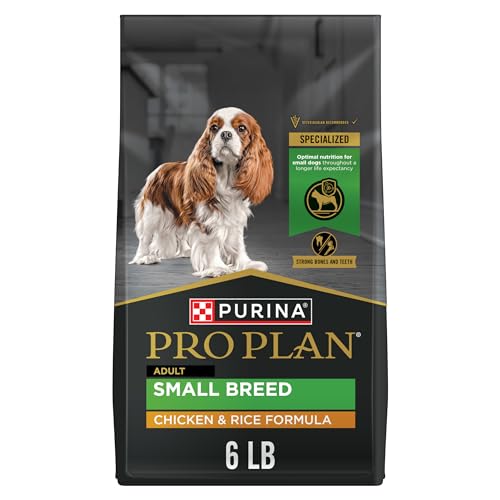
For most first-time owners of a small breed dog, we recommend Purina Pro Plan Small Breed Chicken & Rice Formula. It offers balanced nutrition with high-quality protein, DHA for brain development, and small kibble size. If your dog has a sensitive stomach, consider Hill’s Science Diet Small & Toy Breed Sensitive Stomach & Skin. For a budget-friendly option, Iams ProActive Health Small Breed delivers solid nutrition at a lower price.
What to consider for Small Breed Dog Food For First Time Owners
Small breed dogs (typically under 20 pounds) have faster metabolisms and smaller mouths than larger dogs. They need a calorie-dense food to meet their energy requirements without overfeeding. Kibble size matters: small or toy breed formulas have tiny pieces that are easier to chew and digest. First-time owners should also look for a food that includes DHA for brain development in puppies and joint support for adults. Many small breeds are prone to dental issues, so kibble texture that helps reduce plaque is a plus. Always choose a formula that is complete and balanced for your dog’s life stage (puppy, adult, or senior).
What to look for in a dog food
When selecting a small breed dog food, start with an AAFCO statement confirming it is complete and balanced for your dog’s life stage. The first ingredient should be a named meat source (e.g., chicken, lamb, salmon). Protein content should be around 25 to 30% for puppies and 22 to 26% for adults. Fat levels of 12 to 18% provide energy, while calories range from 350 to 450 kcal per cup. Small breed formulas often include glucosamine and chondroitin for joint health and omega-3 fatty acids for skin and coat. Avoid foods with excessive fillers like corn or soy, and ensure the kibble size is appropriate for small mouths.
How we chose these picks
- Evaluated products based on ingredient quality and nutritional adequacy for small breeds.
- Checked that each formula meets AAFCO nutrient profiles for the appropriate life stage.
- Considered kibble size and shape to ensure it suits small mouths.
- Reviewed customer feedback for palatability and digestive tolerance.
- Prioritized brands with a history of rigorous quality control and research.
- Included options at various price points to accommodate different budgets.
- Selected foods with named meat as the first ingredient and limited artificial additives.
- Never ranked a product higher just because it pays a commission.
What to avoid
- Foods with unnamed meat meals (e.g., “meat meal”) as the primary protein source.
- Grain-free or legume-heavy recipes unless advised by a veterinarian, due to the ongoing FDA investigation into a potential link with canine dilated cardiomyopathy (DCM).
- All-life-stages formulas for small breed puppies, as they may not have the right calcium-to-phosphorus ratio for proper growth.
- Abrupt diet changes; transition over 7 to 10 days by mixing increasing amounts of new food with old.
For more guidance, visit our dog guides and explore dog food or dog nutrition resources.


