When a dog has loose stool, gas, or an upset stomach after a diet change, a probiotic is often the first thing owners reach for. We looked at five popular natural options and evaluated them the way we would for our own dogs: how many live cultures are guaranteed at the end of shelf life, whether the strains are named, and what long-term owners report about consistency. In our evaluation we found that the gap between a good probiotic and a forgettable one usually comes down to honesty on the label. The formulas we recommend list their CFU count, identify their strains, and pair the bacteria with a prebiotic fiber to help them survive. Probiotics are a digestive support tool, not a treatment for illness, so talk to your veterinarian before starting one if your dog has ongoing symptoms.
Best Natural Probiotic For Dogs (2026): 5 Top Picks Reviewed
We compared five natural dog probiotics against published CFU standards, strain transparency, and aggregated owner feedback to find the formulas that actually hold up. Our picks favor live-culture guarantees and prebiotic pairing over flashy marketing.
Some links below are affiliate links. If you buy through them we may earn a small commission at no extra cost to you. Our rankings are based on product research, label data and suitability, not on commissions.
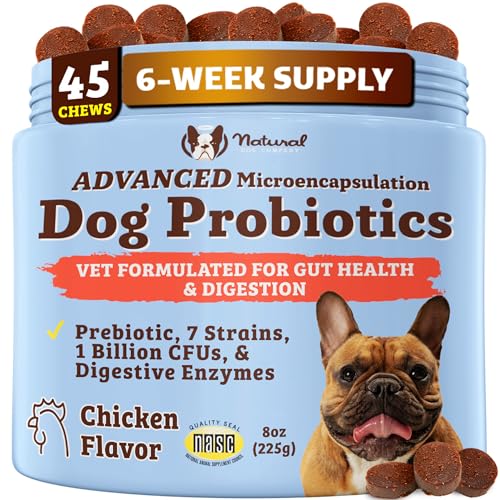 ★ Top Pick: Natural Dog Company Probiotics for Dogs - Dog Probi…
Quick Comparison
| Product | Best For | |
|---|---|---|
| Natural Dog Company Probiotics for Dogs - Dog… | Best Overall | Check price → |
| Zesty Paws Probiotics for Dogs - Digestive En… | Best Value | Check price → |
| Pet Naturals Daily Probiotic Soft Chews for D… | Best for Daily Support | Check price → |
| Fera Pets Probiotics for Dogs & Cats with Pre… | Best Premium | Check price → |
| TTLXRL Probiotics for Dogs 200pcs Dog Probiot… | Best Budget | Check price → |
The single biggest differentiator we found was a CFU count guaranteed through the expiration date rather than only at manufacture, since live cultures decline on the shelf.
Types Explained
Soft chews
Flavored chewable supplements that most dogs accept as a treat, with cultures and often prebiotics blended in.
Best for: Dogs that take treats easily and owners who want a no-mess daily routine.Powder formulas
Unflavored or lightly flavored powders measured and mixed directly into food, often with higher CFU flexibility.
Best for: Picky eaters, multi-dog households, and owners who want to adjust the serving size.Capsules
Sealed capsules that protect cultures from air and moisture, given whole or opened over food.
Best for: Dogs needing a specific named-strain dose and owners who prioritize shelf stability.Top 5 Picks
Natural Dog Company Probiotics for Dogs - Dog Probiotic Chews with 1B CFUs, Canine-Specific Microencapsulated Strains, Prebiotics & Enzymes for Digestive Health, Stool & Immune Support, 45 Ct
We chose the Natural Dog Company Probiotics for Dogs - Dog Probiotic Chews with 1B CFUsformula as our overall pick because it pairs a clear 1 billion CFU guarantee with a chewable format most dogs accept readily. In our evaluation we liked that the strains and prebiotic support were spelled out rather than hidden behind a generic blend.

Zesty Paws Probiotics for Dogs - Digestive Enzymes for Gut Flora, Digestive Health, Diarrhea & Bowel Support - Clinically Studied DE111 - Dog Supplement Soft Chew for Pet Immune System - Pumpkin, 90ct
We recommend Zesty Paws as the value pick because it bundles digestive enzymes alongside the probiotic cultures for broad gut support at an accessible serving cost. What we like is the soft-chew format that doubles as a treat for dogs that resist powders.
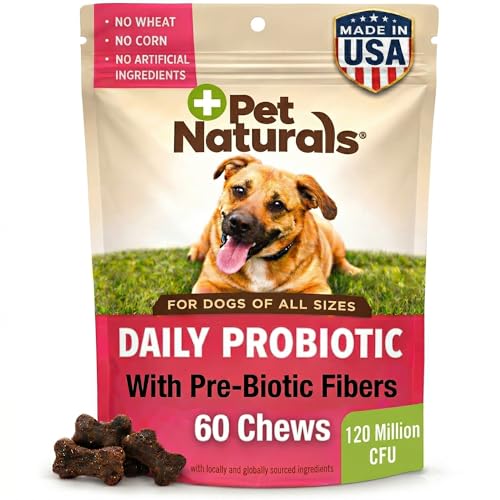
Pet Naturals Daily Probiotic Soft Chews for Dogs, Digestive and Immune Support Supplement, 1 Billion CFU Per Chew, Duck, 60 Count
We picked Pet Naturals for owners wanting a simple daily soft chew aimed at both digestive and immune support. In our comparison it stood out for a short, readable ingredient panel that suits dogs with sensitive stomachs.

Fera Pets Probiotics for Dogs & Cats with Prebiotics - USDA Organic - Gut Health Powder Supplement with 12 Strains and 5 Billion CFUs - Supports Immunity, Energy and Skin & Coat - 60 Scoops
We selected Fera Pets as the premium choice for its USDA Organic certification and prebiotic pairing, which signals stronger sourcing standards. We recommend it for owners willing to prioritize certified ingredients and gut-health transparency.

TTLXRL Probiotics for Dogs 200pcs Dog Probiotics for Digestive Health Digestive Enzymes and Prebiotic, Probiotic Chews for Dogs Support Gut Health, Relieve Diarrhea, Itchy Skin, Enhance Immunity
We chose the TTLXRL 200-count as the budget pick because its large count stretches the cost per serving for multi-dog or long-term use. In our evaluation we would confirm strain details before buying, but the value for routine digestive support is hard to beat.
Key Buying Factors
Guaranteed CFU count
Look for a CFU number guaranteed through the expiration date, not just at the time of manufacture. Live cultures die off over time, so an end-of-shelf-life guarantee is more meaningful.
Named strains
Quality formulas name their strains, such as Bacillus coagulans or Enterococcus faecium. Generic 'probiotic blend' labels make it hard to judge what your dog is actually getting.
Prebiotic pairing
Prebiotic fibers like inulin or FOS feed the bacteria and improve survival through the gut. A probiotic paired with a prebiotic gives the cultures a better chance of taking hold.
Format and palatability
Soft chews, powders, and capsules all work, but the best format is the one your dog will reliably accept. Picky dogs often do better with a flavored chew or a powder mixed into food.
Clean ingredient panel
We favor formulas without unnecessary fillers, artificial colors, or added sugars. Fewer extras means fewer variables if your dog has a sensitive stomach.
Manufacturing transparency
Batch testing, a domestic facility, or third-party verification adds confidence. Supplements are loosely regulated, so a brand that discloses its testing earns trust.
Care, Cost and Maintenance
Introduce gradually
Start with a smaller serving for the first few days so the gut can adjust. A sudden full dose can cause temporary gas or soft stool in some dogs.
Give consistently
Probiotics work best with daily use over time, not as a one-off. Most owners report needing one to two weeks of consistent dosing before they notice a difference.
Store correctly
Keep the container sealed and away from heat and humidity. Some live-culture products last longer when refrigerated, so check the label instructions.
If your dog is on antibiotics, ask your veterinarian about spacing the probiotic a couple of hours apart so the medication does not wipe out the cultures you are trying to add.