Quick answer
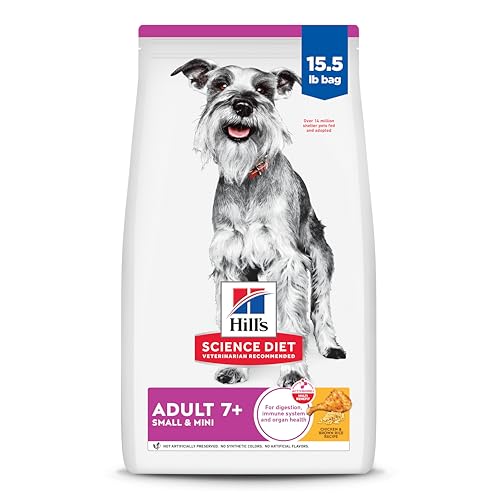
For most senior Dachshurds, our editorial team leans toward Royal Canin Dachshund Adult (8+ informed feeding) or, for a clearly senior-labeled option, Hill’s Science Diet Senior Small Paws as the top overall pick because it combines a named meat first ingredient, a small-breed kibble shape that suits a Dachshund’s narrow jaw, and added omega and joint support that may help cushion an aging spine and joints. Purina Pro Plan Bright Mind 7+ Small Breed fits better if cognitive aging is a concern, Wellness Complete Health Senior suits owners who want a grain-inclusive everyday recipe, Diamond Naturals Senior is the budget choice, and Hill’s Science Diet Sensitive Stomach & Skin Small Breed is our pick when digestion or itchy skin is the bigger issue. Always confirm any switch with your own veterinarian, especially if your dog has a diagnosed condition.
What to consider for Senior Dog Food For Dachshund
The Dachshund’s defining trait, that long spine and short legs, is also its biggest health vulnerability. The breed is strongly predisposed to intervertebral disc disease (IVDD), and excess body weight puts measurable extra load on the back, so weight control is arguably the single most important nutritional goal for a senior Dachshund. A calorie-dense food fed at the wrong portion is an easy way to add pounds that strain the disc spaces.
Seniors also tend to slow down, so they usually need fewer calories than they did at 3 years old, while still getting enough quality protein to hold onto muscle that stabilizes the spine. The breed’s small mouth means kibble size and shape matter for comfortable chewing, and dental disease is common in small breeds, which can make hard, oversized pieces frustrating to eat. Joint and omega support (glucosamine, chondroitin, EPA and DHA) is genuinely relevant here, though it is a support measure and not a treatment. If your Dachshund has any history of back pain, pancreatitis, or kidney changes, those conditions change the ideal diet, so talk to your veterinarian before choosing.
What to look for in a dog food
Look first for an AAFCO complete and balanced statement for the correct life stage, in this case “adult maintenance” or a senior formula validated for adult maintenance, since “senior” itself is a marketing term and not a separate AAFCO life stage. Check that a named meat (such as chicken, lamb, salmon, or beef) is the first ingredient rather than a vague “meat” or an unnamed meal standing alone.
For a typical less active senior Dachshund, many adult and senior dry foods land around 18 to 28 percent protein and 8 to 16 percent fat on a dry-matter basis, with roughly 320 to 400 calories per cup. These are general ranges to compare products, not medical rules, and the right numbers depend on your individual dog. Dachshunds are a small breed, so choose small-breed or all-breed formulas with appropriately sized kibble rather than large-breed recipes. Joint support like glucosamine and chondroitin, plus omega-3 fatty acids (EPA and DHA), is a reasonable plus for an aging spine, but treat it as supportive rather than curative and ask your veterinarian about dosing for any diagnosed joint or disc condition.
How we chose these picks
- We focused on recipes with a named meat as the first ingredient, not a vague “meat” or unnamed meal.
- We confirmed each product carries an AAFCO complete and balanced statement for the appropriate adult or senior life stage.
- We favored small-breed or all-breed kibble sizing that suits a Dachshund’s small jaw and common dental wear.
- We weighted calorie density and weight-management suitability heavily, given the breed’s IVDD and back-strain risk.
- We looked for added joint support (glucosamine, chondroitin) and omega-3s, while treating them as supportive, not medical, features.
- We compared using publicly available manufacturer information, ingredient panels, and established nutrition guidance, not personal lab testing.
- We checked each brand against publicly posted FDA recall information at the time of writing and noted that recall status can change.
- We never ranked a product higher just because it pays a commission.
What to avoid
- An unnamed “meat meal” listed as the only protein source, with no named animal, which makes the protein quality hard to judge.
- Defaulting to grain-free or legume-heavy (pea, lentil, chickpea) recipes without a specific reason. The FDA investigation into a potential link between certain diets and canine dilated cardiomyopathy is ongoing and not resolved, so a grain-inclusive recipe is the safer default for most dogs unless your veterinarian advises otherwise.
- Feeding an all-life-stages or large-breed puppy formula to a senior Dachshund. All-life-stages foods are formulated to also meet growth needs and are often richer than a senior small breed needs, while large-breed puppy formulas are the wrong fit entirely.
- Abrupt diet switches. Transition over about 7 to 10 days, mixing increasing amounts of the new food into the old, since a sudden change can upset a sensitive senior stomach.
For more breed and life-stage help, browse our dog guides, our dog food roundups, and our dog health resources.


