Quick answer
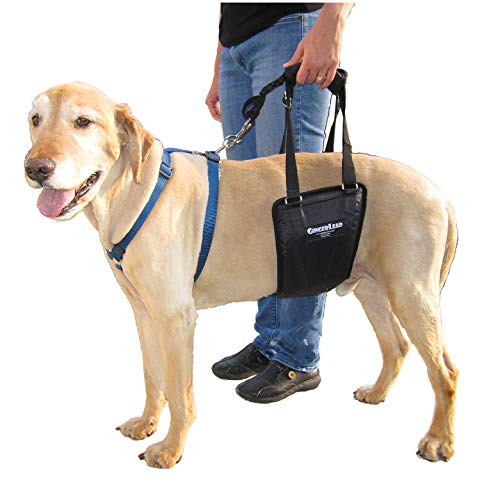
For most dogs with arthritis, our top pick is the Ruffwear Web Master Harness. Its padded chest and belly panels spread pressure away from sore joints, and the sturdy top handle lets you gently steady or assist your dog over thresholds, stairs, and into the car without grabbing a collar or pulling on a stiff leg. If your dog struggles most with the act of putting the harness on, the step-in Rabbitgoo Step-In Harness avoids lifting legs over the head. For larger or rear-end-weak dogs that need real lifting help, a dedicated lift harness such as the GingerLead style support sling fits better. The PetSafe 3 in 1 suits owners who want one padded harness for both walking and occasional car restraint, and the Kurgo Tru-Fit is the value choice for everyday padded support.
What to consider for Dog Harness For Dogs With Arthritis
Arthritis changes what a good harness looks like. The single biggest factor is how the harness goes on and off. Many standard harnesses require lifting a paw up and through a loop or pulling the harness over the head, which forces a stiff, painful dog to bear weight on a sore joint or twist a tender shoulder. Step-in and fully unbuckling designs that you lay under the dog and clip on the back are far kinder.
The second factor is load distribution. Arthritic dogs often have pain in the hips, elbows, shoulders, or spine. A harness with a wide, padded chest plate and a belly panel spreads any leash or steadying force across a large area instead of concentrating it on the neck or a single sore point. Avoid thin straps that dig in.
Third is handled support. A rigid, well-placed top handle (ideally over the dog’s center of gravity) lets you offer a gentle boost up steps or into a vehicle, which is often where arthritic dogs need the most help. For dogs with significant hind-end weakness, a rear or full-body support sling is more appropriate than a walking harness alone. Always introduce any assistance slowly, and if your dog shows pain, stiffness, or reluctance to move, talk to your veterinarian about a pain-management and mobility plan before relying on gear.
What to look for in a gear item (harness, collar, leash or muzzle)
Correct fit and sizing. Measure your dog’s chest girth at the widest point behind the front legs and the neck base, then match to the brand’s size chart rather than guessing by weight. You should be able to slide two fingers under any strap. A snug, even fit prevents both chafing and escape, and matters more for thin senior dogs whose muscle has wasted around the joints.
Durable hardware and materials. Look for metal load-bearing rings, reinforced stitching, and abrasion-resistant webbing. For a dog you may need to steady or partially support, the buckle and handle stitching are doing real work, so flimsy plastic side-release clips on a strong dog are a weak point.
Safety features. Escape resistance matters for anxious seniors, so a three-strap or multi-point design backs out far less easily than a simple loop. A chest-based or no-choke front design keeps pressure off the trachea, which is important for any dog and especially flat-faced or tracheally sensitive breeds. Reflective trim adds visibility on slow early-morning or evening walks.
Comfort and padding. Wide, soft, breathable padding across the chest and belly is the difference between a harness an arthritic dog tolerates and one it resents. Padding also stops thin straps from pressing into bony, low-muscle areas.
No-pull design where relevant. Many arthritic dogs walk slowly and pull little, so a no-pull front clip may be less critical than comfort. But if your dog still lunges, a front-clip option reduces sudden jolts through sore joints. A no-pull harness is a management tool, not a training substitute, so pair it with reward-based training from a certified trainer.
How we chose these picks
- We focused on designs that reduce joint stress when putting the harness on, prioritizing step-in and fully unbuckling styles over pull-over-the-head loops.
- We compared padded chest and belly panels and load distribution using each manufacturer’s published materials and specifications.
- We checked for a usable, well-positioned support handle for steadying dogs over stairs and into vehicles.
- We assessed hardware quality from product specs, including metal load rings, buckle type, and reinforced stitching.
- We read patterns in publicly available owner reviews to surface recurring real-world cons, not just praise.
- We confirmed each product is currently sold and available in a range of sizes from small to large dogs.
- We weighed escape resistance and no-choke chest positioning, which matter for anxious or tracheally sensitive seniors.
- Never ranked a product higher just because it pays a commission.
What to avoid
- Ill-fitting sizes. A harness chosen by weight alone can sit loose on a muscle-wasted senior, causing chafing or letting the dog back out. Always measure girth and check the size chart.
- Flimsy clips that fail on strong dogs. Lightweight plastic side-release buckles can crack or pop open under sudden load, which is dangerous if you are also using the harness to steady your dog.
- Aversive tools used without professional guidance. Avoid choke, prong, or shock collars on arthritic dogs, as added neck or body stress can worsen pain. Work with a certified trainer instead.
- Retractable leashes near traffic. The thin cord and sudden jerks offer poor control and can yank a stiff, slow-reacting senior, which is unsafe near roads.
For more breed-by-breed and need-by-need advice, browse our dog guides, our dog health resources for senior and mobility topics, and our dog care products roundups for everyday gear.