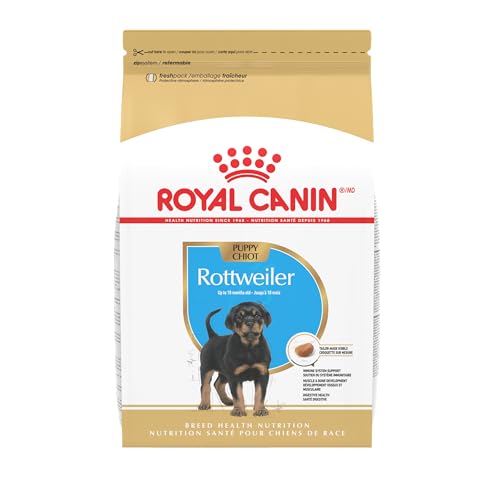
Quick answer
Our top pick is Royal Canin Rottweiler Puppy Dry Dog Food, specifically formulated for the breed’s unique growth needs. It provides the right balance of protein, fat, and calcium for controlled growth. For a more budget-friendly option, Purina Pro Plan Large Breed Puppy offers excellent nutrition at a lower price. If your puppy has a sensitive stomach, Hill’s Science Diet Large Breed Puppy is a great choice.
What to consider for Dry Dog Food For Rottweiler Puppies
Rottweiler puppies are large-breed dogs with a rapid growth rate. They require a diet that supports steady, controlled growth to reduce the risk of hip and elbow dysplasia. Key considerations include appropriate calcium and phosphorus levels (around 1.0-1.5% calcium on a dry matter basis), a named animal protein as the first ingredient, and DHA for brain development. Also look for glucosamine and chondroitin for joint health. Avoid foods with excessive calories that can lead to obesity, as Rotties are prone to weight gain.
What to look for in a dog food
First, ensure the food meets AAFCO nutrient profiles for growth (puppy) or all life stages. The first ingredient should be a named meat like chicken, lamb, or fish. Protein should be around 22-32% and fat around 12-20% on a dry matter basis, but these are general ranges; always follow your vet’s advice. For large-breed puppies, calcium levels should be between 0.8% and 1.2% (dry matter) to support proper bone development. Look for added DHA for cognitive development, and glucosamine/chondroitin for joints. Grain-inclusive formulas are generally recommended unless your vet advises grain-free due to a specific allergy.
How we chose these picks
- Evaluated each product’s nutritional adequacy statement and ingredient quality.
- Prioritized formulas specifically labeled for large-breed puppies or breed-specific lines.
- Checked for calcium and phosphorus levels within safe ranges for large-breed puppies.
- Considered protein and fat balance to support growth without excess calories.
- Looked for inclusion of DHA, glucosamine, and chondroitin.
- Selected products from reputable brands with a history of meeting AAFCO standards.
- Excluded products with unnamed meat meals as the primary protein source.
- Never ranked a product higher just because it pays a commission.
What to avoid
- Avoid foods where an unnamed “meat meal” is the only protein source; look for named ingredients like chicken meal or lamb meal.
- Be cautious with grain-free or legume-heavy recipes due to the ongoing FDA investigation into a potential link with canine dilated cardiomyopathy (DCM). Grain-inclusive diets are generally recommended unless your veterinarian advises otherwise.
- Do not feed an “all life stages” food to a large-breed puppy, as it may have inappropriate calcium or calorie levels.
- Avoid abrupt diet switches; transition over 7-10 days to prevent digestive upset.
For more tips, visit our dog guides, dog food, and dog nutrition sections.


