Quick answer
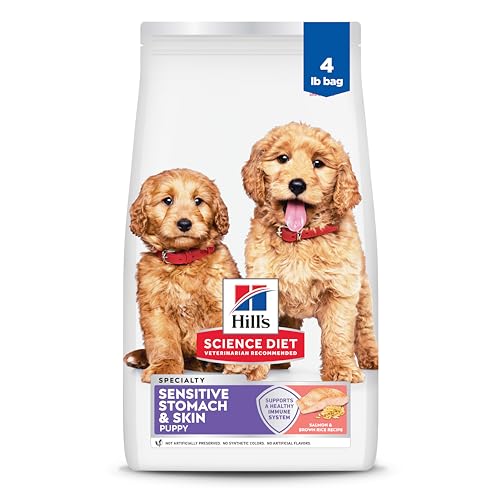
For most dachshund puppies, our top pick is Royal Canin Dachshund Puppy dry food. It’s breed-specific with a unique kibble shape that encourages chewing, plus balanced calcium for proper bone growth. If your pup has a sensitive stomach, Hill’s Science Diet Puppy Sensitive Stomach & Skin is a great alternative. Budget-conscious owners can consider Purina Pro Plan Puppy Small Breed.
What to consider for Puppy Food For Dachshund Puppies
Dachshund puppies are prone to intervertebral disc disease (IVDD) due to their long spines. Excess weight puts extra strain on their backs, so a diet that supports lean body condition is critical. They also grow rapidly in the first year, requiring controlled calcium and phosphorus levels to prevent skeletal abnormalities. Small breed puppies have fast metabolisms and need nutrient-dense food with appropriate kibble size to prevent choking. Additionally, dachshunds can be picky eaters, so palatability matters.
What to look for in a dog food
Look for a food that meets AAFCO nutrient profiles for growth. The first ingredient should be a named animal protein like chicken or lamb. Protein content around 28 to 32% and fat around 15 to 20% on a dry matter basis is typical for small breed puppy formulas. Calorie density should be moderate to avoid rapid weight gain. For dachshunds, a small breed formula with kibble sized for tiny jaws is ideal. Joint-supporting nutrients like glucosamine and omega-3 fatty acids (DHA) are beneficial for brain and joint development. Avoid foods with excessive calcium or phosphorus; aim for calcium around 1.0 to 1.3% and phosphorus 0.8 to 1.0%.
How we chose these picks
- Evaluated each product’s AAFCO nutritional adequacy statement for growth.
- Checked that the first ingredient is a named animal protein source.
- Assessed ingredient quality and avoided artificial preservatives, colors, and flavors.
- Considered kibble size and shape suitability for small breeds like dachshunds.
- Reviewed guaranteed analysis for appropriate protein, fat, and calorie levels for puppies.
- Looked for added DHA for brain and eye development and glucosamine for joint health.
- Prioritized brands with a history of rigorous quality control and feeding trials.
- Never ranked a product higher just because it pays a commission.
What to avoid
- Avoid foods with unnamed meat meal (e.g., “meat meal”) as the primary protein source; it indicates lower quality.
- Do not default to grain-free or legume-heavy recipes without veterinary advice due to the ongoing FDA investigation into a potential link with canine dilated cardiomyopathy (DCM). Grain-inclusive diets are generally safer.
- Do not feed an all-life-stages food to a dachshund puppy, as it may have inappropriate calcium levels for large breed growth, but for small breeds it might be acceptable if calcium is within safe limits; however, a specific puppy formula is better.
- Avoid abrupt diet switches; transition over 7 to 10 days by gradually mixing old and new food.
For more guidance, explore our dog guides, dog food, and dog health resources.