Quick answer
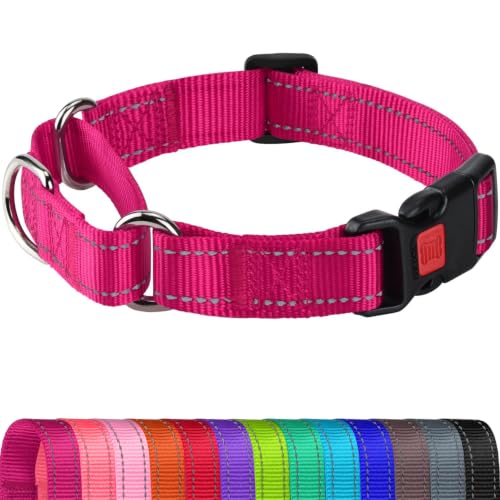
The 2 Hounds Design Freedom No Pull Martingale Collar is our top pick for dogs with neck issues because it combines a martingale loop with a front attachment for gentle steering, reducing neck strain. For budget-conscious owners, the Rabbitgoo Martingale Collar offers similar features at a lower price. The Blue-9 Balance Harness is a great alternative if you prefer a harness that avoids the neck entirely.
What to consider for Martingale Dog Collar For Dogs With Neck Issues
Dogs with neck issues, such as intervertebral disc disease or tracheal collapse, require collars that minimize pressure on the throat and cervical spine. A martingale collar can be a safer alternative to a standard buckle collar because it tightens only enough to prevent slipping out, but it still applies some pressure. Look for collars with a limited slip design (typically 2 to 3 inches of tightening) and a wide, padded section that distributes force across the neck rather than concentrating it on the trachea. Avoid collars with metal prongs or pinch mechanisms. For severe neck conditions, a harness that clips on the chest or back may be more appropriate; consult your veterinarian.
What to look for in a gear item (harness, collar, leash or muzzle)
Correct fit and sizing: Measure your dog’s neck and head circumference; the martingale loop should be snug but not tight when the dog is relaxed. Durable hardware and materials: Look for rust-resistant buckles and D-rings, and nylon or leather that can withstand pulling. Safety features: Escape-resistant design (limited slip prevents backing out), reflective stitching for visibility, and a quick-release buckle for emergencies. Comfort and padding: A neoprene or fleece lining reduces chafing and spreads pressure. No-pull design: Some martingale collars have a front D-ring for leash attachment, which helps redirect pulling without choking.
How we chose these picks
- We evaluated martingale collars based on their suitability for dogs with neck issues, prioritizing designs that minimize tracheal pressure.
- We reviewed product specifications, materials, and safety features from manufacturer websites and trusted retailers.
- We considered customer feedback on fit, durability, and effectiveness for escape-prone dogs.
- We compared price points to include options for different budgets.
- We consulted veterinary guidelines on safe collar use for dogs with cervical spine or tracheal conditions.
- We excluded any collar that uses choke, prong, or pinch mechanisms.
- We verified that each pick is currently available on Amazon.
- Never ranked a product higher just because it pays a commission.
What to avoid
- Ill-fitting sizes: A collar that is too loose can slip off, while one that is too tight can aggravate neck issues. Always measure your dog and follow the manufacturer’s sizing chart.
- Flimsy clips that fail on strong dogs: Look for heavy-duty hardware, especially if your dog is a puller.
- Aversive tools used without professional guidance: Prong collars, choke chains, and shock collars can worsen neck problems and should only be used under the direction of a certified trainer or veterinarian.
- Retractable leashes near traffic: They can cause sudden jerks that harm the neck; use a standard 4 to 6 foot leash with a martingale collar.
For more guidance, explore our dog guides, dog health, and dog care products.