Quick answer
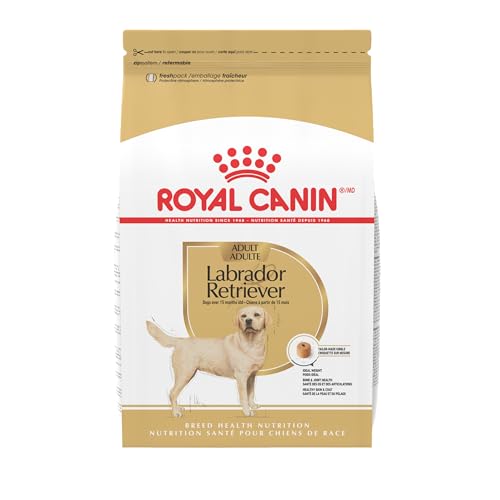
For most healthy adult Labradors, the right choice is a large-breed formula with controlled calories and built-in joint support. Our top pick is Royal Canin Labrador Retriever Adult, because its calorie-managed recipe and slow-feed kibble shape suit the breed’s big appetite and its hard-working joints. Active or working labs do better on the higher-energy Purina Pro Plan Sport 30/20, while budget-focused owners get strong value from Diamond Naturals Large Breed.
Why Labradors need different food
Labradors are a nutritionist’s paradox: one of the easiest breeds to feed and one of the easiest to overfeed. Research from the University of Cambridge found that roughly one in four Labradors carries a deletion in the POMC gene that blunts the sense of fullness, which helps explain why this breed is statistically among the most likely to become overweight. On top of that appetite, Labs are a large, athletic breed predisposed to hip and elbow dysplasia. So a good food does three jobs at once. It keeps calories in check, it delivers enough quality protein to hold lean muscle, and it supplies the glucosamine and omega-3 (EPA and DHA) that support aging joints.
What to look for in a Labrador food
Before you focus on brand or flavour, check four things: a named meat as the first ingredient, a moderate calorie density so an inactive lab does not pile on weight, guaranteed glucosamine and chondroitin plus omega-3s for the joints, and an AAFCO statement that matches your dog’s life stage. The detailed buying factors further down explain each of these. Puppies are a special case and need a large-breed puppy formula with controlled calcium to slow bone growth and protect developing joints.
Find the right food for your dog’s needs
The picks above suit a healthy adult Labrador. For a specific life stage or health need, use these focused guides.
- Puppies: see our guide to the best Labrador food for puppies.
- Seniors: see our guide to the best Labrador food for senior dogs.
- Sensitive stomachs: see our guide to the best Labrador food for sensitive stomachs.
- Hip and joint: see our guide to the best Labrador food for hip and joint issues.
- Skin allergies: see our guide to the best Labrador food for skin allergies.
Which food type is best?
Dry, wet, fresh, raw and dehydrated foods can all work for a Labrador. The right one depends on your budget, your dog’s preferences and any health needs.
- Dry: most economical and convenient, and the crunch helps clean teeth.
- Wet: higher moisture and often more palatable, useful for fussy eaters or as a topper.
- Fresh and gently cooked: minimally processed with recognisable ingredients, at a higher cost.
- Raw and freeze-dried raw: high protein and minimally processed; handle safely and ask your vet first.
Getting the best value
The cheapest bag is not always the best value. A quality food that keeps your Labrador lean, with a healthy coat and firm stools, often means fewer vet visits. Feed to a healthy body condition rather than the bag maximum, and choose a recipe built around quality animal protein.
How we chose these foods
We are an editorial team, not your dog’s veterinarian. Rather than testing foods in a lab, we compared formulas using publicly available label data and well-established large-breed nutrition principles. For each pick we:
- Checked the AAFCO life-stage statement on the label (growth, adult maintenance or all life stages)
- Confirmed the formula is suitable for a large-breed adult dog
- Compared protein, fat and calorie density
- Looked for joint-support nutrients: glucosamine, chondroitin and omega-3 (EPA and DHA)
- Checked ingredient transparency and brand availability
- Treated grain-free, legume-heavy recipes with extra caution
- Read real owner feedback for recurring red flags
- Never ranked a food higher just because it pays a commission
Recipes, formulations and prices change, so always read the current label before you buy.
Foods to avoid or feed with care
- Formulas whose only protein is an unnamed “meat meal” with no species listed
- Recipes loaded with peas, lentils and other legumes, given the FDA’s ongoing diet-associated DCM investigation
- Generic “all life stages” foods fed to a fast-growing large-breed puppy that needs controlled calcium
- Table scraps and high-fat human foods, which a food-motivated lab will happily overeat
- Any food your vet has told you to avoid for a specific health reason
Want to go deeper? Browse our wider dog food guides, dog nutrition advice and dog health coverage.