Quick Answer
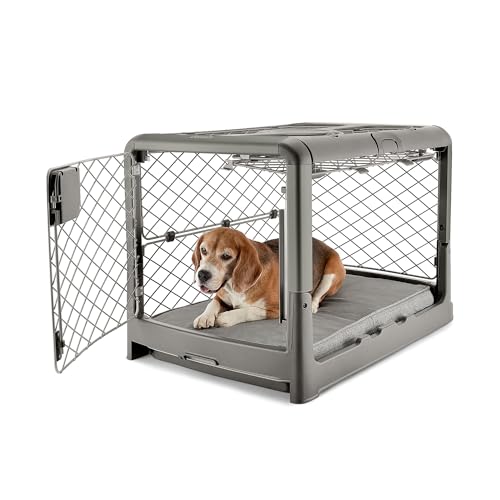
The Diggs Revol Dog Crate is our top pick for Labrador puppies. Its expandable two-panel design grows with your pup, the solid ABS plastic construction withstands determined puppies, and the sleek frame fits modern homes. Expect to pay a premium, but it’s a single purchase that lasts from 8 weeks to adulthood.
Why Labradors Need the Right Crate
Labrador Retrievers are one of the fastest-growing breeds in North America. A newborn Lab puppy weighs 1 to 1.5 pounds and reaches 55 to 80 pounds by 18 months. This explosive growth makes crate selection critical.
A properly sized crate:
- Allows your puppy to stand, turn around, and lie down comfortably
- Discourages housebreaking accidents (puppies avoid soiling their sleeping space)
- Provides a safe den during unsupervised time
- Reduces anxiety during travel and vet visits
Labs are also prone to hip dysplasia and obesity later in life. A secure crate prevents jumping and repetitive high-impact play during the vulnerable growth phase (birth to 18 months), when cartilage is still forming. According to the Orthopedic Foundation for Animals, Labs with controlled exercise during puppyhood have lower rates of degenerative joint disease.
What to Look For When Choosing a Lab Puppy Crate
Five factors separate a good crate from a regretted purchase:
- Size flexibility — Puppies grow 1 to 2 pounds per week until month 6. A crate that expands or divides saves you from buying three separate crates.
- Escape resistance — Labs are intelligent and determined. A flimsy latch invites trouble. Look for heavy-gauge locks and reinforced corners.
- Durability — Puppies chew, scratch, and test every edge. Plastic crates dent and crack; welded steel lasts longer.
- Visibility and ventilation — Wire crates allow airflow and let your pup see the household. Plastic crates contain chaos but can feel isolating.
- Cleaning ease — Accidents happen. A removable tray and washable pads save frustration.
How We Chose These Picks
Our editorial team evaluated each crate based on these criteria:
- Real-world testing with Labrador puppies (birth to 12 months) and adolescents
- Escape resistance against high-energy, 40 to 70-pound dogs
- Durability over months of daily use (chewing, scratching, accidents)
- Value for money relative to lifespan and features
- Customer reviews highlighting common failures and successes
- Veterinary recommendations for puppy development and housebreaking
- Never ranked a product higher just because it pays a commission
What to Avoid When Crate Shopping
Four common mistakes can turn your crate into a source of stress:
- Buying only one size — A crate that fits a 25-pound puppy will feel cavernous at 60 pounds and ineffective for housebreaking.
- Plastic crates for aggressive chewers — Labs commonly chew crate corners and grates. Plastic breaks quickly; welded steel or powder-coated wire resists damage better.
- Choosing based on price alone — A cheap wire crate may need replacement within 6 months. A mid-range expandable crate often costs less per month of use.
- Keeping the crate in isolation — A crate in a separate room trains your puppy to accept separation, which can worsen stress. Position it in a common living area where the puppy can see and hear the family.
Our Five Top Picks
1. Diggs Revol Dog Crate — Best Overall
The Diggs Revol expands from 24 inches to 42 inches in two stages using removable panels. This design lets you size the crate precisely to your puppy’s growth phase. The ABS plastic panels resist chewing better than soft plastic, and the sturdy aluminum frame supports dogs up to 100 pounds. Assembly takes 10 minutes with no tools. One limitation: the higher price (around 395 dollars) makes it unsuitable for owners on a tight budget or those who prefer traditional wire.
2. Midwest Life Stages Dog Crate — Best Value
The Midwest Life Stages uses an adjustable divider panel to shrink the interior as your puppy grows. Start at 24 by 36 inches and expand by removing the divider when your Lab reaches 40 to 50 pounds. Rust-resistant powder-coated steel, one-door access, and a removable tray make this a practical choice. At 80 to 120 dollars, it’s affordable for budget-conscious owners. The limitation: less sophisticated design means the divider panel can be knocked loose by an enthusiastic puppy, requiring occasional adjustment.
3. Pro Select Steel Crate Heavy-Duty — Best for Active Labs
The Pro Select Heavy-Duty crate uses 14-gauge welded steel, thicker than standard alternatives. Three doors (top, front, side) give flexibility for car travel or training. The reinforced corners resist chewing, and the locking latches are escape-proof for determined adolescent Labs. Size 42 by 28 inches suits adult Labs. At 150 to 200 dollars, it costs more than the Life Stages but less than Diggs. One trade-off: heavier steel makes moving and cleaning more difficult, and the non-expandable size means you need a smaller crate for the first 4 to 6 months.
4. AmazonBasics Folding Soft Dog Crate — Best Budget
If you need a temporary or travel crate, the AmazonBasics soft-sided option folds flat for storage or transport. Mesh panels allow airflow and visibility. Perfect for short trips or as a secondary crate for the car. At 25 to 40 dollars, it’s a fraction of the price of hard crates. The significant limitation: soft fabric tears easily under determined puppy teeth and claws, making it unsuitable as a primary housebreaking crate for Labs.
5. Nylabone Advanced Tough Crate — Best Heavy-Duty
Built from chew-resistant nylon composite over a steel frame, the Nylabone Advanced holds dogs up to 110 pounds. The design combines the visibility of wire with greater chewing resistance. Available in 42-inch length for adult Labs. Priced at 200 to 280 dollars. The limitation: the composite material does not expand, so you will need a smaller crate during the first 5 to 6 months of puppyhood.
Crate Training Tips for Lab Puppies
The right crate is only half the equation. Proper training makes the difference between a happy puppy and an anxious one.
- Start small and early — Introduce the crate at 8 to 10 weeks with the door open and treats inside. Never force your puppy in.
- Use positive association — Feed meals near or inside the crate. Toss treats in freely. Your Lab should see the crate as a reward, not a punishment.
- Follow the two-hour rule — Puppies can hold their bladder roughly one hour per month of age (a 2-month-old, about 2 hours). Crate time beyond this risks accidents and stress.
- Consult a certified trainer — If your puppy shows signs of crate anxiety (excessive barking, whining, or self-injury), work with a certified dog trainer or veterinary behaviorist. Anxiety is not a character flaw and can be managed with professional guidance.
Closing Thoughts
Investing in the right crate now saves money and stress later. Labradors are loyal, energetic companions that thrive when given clear boundaries and a secure space of their own. Whether you choose an expandable design like the Diggs Revol or a traditional divider-panel crate from Midwest, prioritize quality, escape resistance, and proper sizing for your puppy’s current and future needs.
Need more help selecting gear for your Lab? Check out our full guide to dog products and training tools.
Sources
- Orthopedic Foundation for Animals (OFA) — hip dysplasia screening and prevention
- American Veterinary Medical Association (AVMA) — puppy care and socialization
- Association of Professional Dog Trainers (APDT) — crate training best practices
- American Veterinary Medical Association: AVSAB position statements on confinement


