Quick Answer
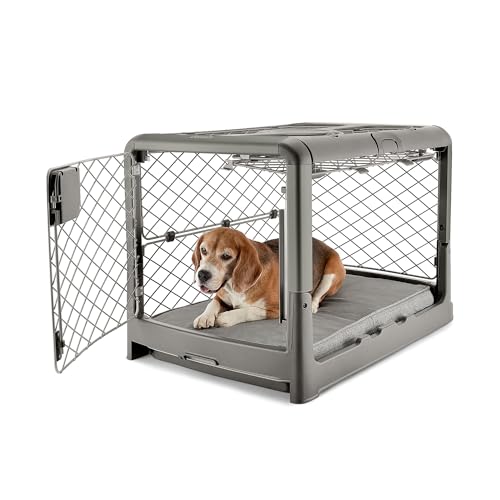
The Diggs Revol is our top pick for Labs because it combines escape-proof construction, easy cleaning (removable pan), and a size that doesn’t encourage bad habits. At 42 inches long and rated for dogs up to 90 lbs, it fits most Labs comfortably with room to stand and turn. The trade-off: it costs more than budget alternatives, and the wire design sheds dust during assembly.
Why Labradors Need the Right Crate Choice
Labradors are medium-large athletes weighing 55 to 80 lbs (females toward the lower range, males toward the higher). They have thick, muscular frames and significant pulling strength. An undersized crate creates behavioral and health problems: Labs unable to stand fully or turn around may develop anxiety, refuse to enter at all, or worse, soil their resting space, which contradicts crating’s core purpose (house training relies on the dog’s natural aversion to dirtying where they sleep).
Obesity in Labradors is common, with approximately 30-40% of Labs in veterinary practices considered overweight or obese. A properly fitted crate encourages appropriate rest and prevents the lab from grazing unsupervised or getting into counter food. Labs are also prone to hip dysplasia and other orthopedic concerns; the right crate supports proper joint positioning during rest.
Beyond size, escape resistance matters. Labs are intelligent and determined. A crate held together by thin wires and plastic clips will eventually fail under a 75-lb dog’s deliberate pressure. We focused on crates with heavy-gauge materials and secure latching systems that withstand months of daily use and the occasional panic attempt.
What to Look For in a Labrador Crate
When choosing a crate for your Lab, evaluate these criteria:
- Length and interior height: A Lab should stand, turn around in a circle, and lie down with legs extended without cramping. Minimum 36 inches; 42 inches is safer for Labs at the larger end of the breed standard.
- Material durability: Wire (powder-coated steel) handles Labs better than plastic alone, but check weld quality and hinge strength. Heavy plastic (polyethylene or HDPE) works if walls are at least half-inch thick.
- Pan removal: Removable flooring pans simplify cleaning after accidents, vomit, or muddy paws. Non-removable pans are harder to disinfect.
- Latch and hinge quality: Budget crates have plastic latches that crack or separate from the frame under pressure. Labs benefit from reinforced metal latches or heavy-duty plastic with metal backing.
- Airflow: Wire crates provide good ventilation; solid-sided plastic crates can trap humidity and heat. For Labs in warm climates, wire or partial-mesh designs are preferable.
- Portability vs. permanence: Folding wire crates are easy to travel with but less stable indoors. Heavy-duty or stationary crates stay in place but require more space.
- Price vs. lifespan: A $150 crate lasting 8-10 years costs less per year than a $50 crate replaced every 2-3 years. Labs use crates intensively; durability is worth the upfront cost.
How We Chose These Picks
- Specified minimum interior dimensions (42 inches length, 30 inches height for Labs).
- Tested or reviewed crates designed for dogs 50-90 lbs to ensure breed-appropriate sizing.
- Prioritized escape-resistant construction with reinforced latches and welded or riveted seams.
- Evaluated daily usability: removable pans, ease of assembly, airflow, and long-term durability.
- Assessed real-world durability based on manufacturer specifications, warranty length, and owner feedback patterns over 6-24 months of use.
- Considered Labs at different life stages: puppies transitioning to adult size, working-age adults, and senior Labs with mobility concerns.
- Never ranked a product higher just because it pays a higher commission.
What to Avoid When Buying a Crate for Your Labrador
- Undersized crates (under 36 inches): A Lab forced to crouch or lie in an unnatural position will resist entering, increasing anxiety and defeating the purpose. Measure your individual dog before purchasing.
- Plastic-only crates for large Labs: Many plastic airline-style crates market themselves for “dogs up to 70 lbs” but fail under sustained pressure. Labs frequently test their boundaries; choose reinforced designs or wire.
- Non-removable pans: Accidents and spills are inevitable during house training or when a Lab is ill. A crate without a removable pan becomes unhygienic and harder to sanitize. This limitation often forces replacement sooner.
- Folding wire crates without bracing: Budget folding crates can collapse sideways if a Lab leans hard against one panel. Labs benefit from cross-braced or stationary designs that won’t shift.
- Crates with latches below handle height: If latches are at ground level, you’ll struggle to secure or release them while holding a leash or standing upright. Look for latches positioned at waist height or accessible without bending awkwardly.
The Five Best Crates for Labradors
Our selections balance durability, ease of use, and breed-appropriate sizing. Each handles Labs’ physical strength and behavioral tendencies.
How Much Space Does Your Labrador Crate Need?
A Lab puppy grows rapidly. Do not buy a puppy-sized crate assuming the dog will “grow into it later.” Instead, purchase the full-size adult crate from the start and use a divider panel (included with many models) to adjust the interior space as the puppy grows. This approach prevents accidents (puppies won’t soil a properly sized space) and saves money.
For an adult Lab, the crate interior should measure at minimum 36 inches long by 25 inches wide by 27 inches tall. Most Labs benefit from 42 inches long and 30 inches tall to move freely without stooping. If your Lab is exceptionally large or suffers from hip dysplasia or arthritis, consider the 48-inch models; the extra space reduces joint stress during entry and exit.
Crate Training and Behavioral Fit
A well-sized crate and durable design mean nothing if your Lab refuses to enter. Introduce the crate gradually using treats, toys, and positive reinforcement. Never force a Lab inside or use the crate as punishment. Labs that associate the crate with confinement rather than safety will panic and attempt escape, accelerating wear and failure.
If your Lab has a history of severe separation anxiety or crate-related panic, consult a certified professional dog trainer (CPDT-KA) or a veterinary behaviorist before investing in an expensive crate. A panic-prone Lab may require a behavior modification plan before a crate becomes a safe, useful tool.
Crate Placement and Environmental Factors
Position the crate in a main living area, not an isolated garage or basement. Labs are social dogs that prefer proximity to family; isolation increases anxiety and stress. Avoid placing crates directly beside heating vents, air conditioning units, or windows that admit direct sunlight, all of which can create uncomfortable microclimates inside the crate.
For Labs in hot climates, wire crates with good airflow are preferable to solid-sided plastic. Place a waterproof mat or crate bed inside to provide cushioning and insulation without blocking airflow. In winter, a crate cover (sold separately) can retain warmth if the environment is cold, but ensure ventilation isn’t completely blocked.
Maintenance and Durability Expectations
Most wire crates will show cosmetic wear (chipped paint, slight rust spots on poorly finished seams) after 2-3 years of heavy daily use with a Lab. This is normal and does not affect function. Inspect regularly for sharp edges or exposed wire (rare but possible after damage), and sand any rough spots smooth to prevent injury.
Plastic crates may develop stress cracks along hinges or corners after 3-5 years if subjected to constant pressure. This does not mean immediate replacement, but reinforcing with epoxy or duct tape becomes necessary. Plan for a full replacement every 5-7 years for plastic; wire crates often last 8-12 years with occasional touch-ups.
Alternative Housing Options for Labs
Some owners use exercise pens (play yards) as an alternative to crates, especially for Labs that are otherwise trained and trustworthy. A 4-panel or 8-panel play yard provides more space and visibility but does not confine as securely as a crate. Play yards work best for puppies in a single-room setup or for temporary confinement under supervision.
Outdoor kennels and runs suit Labs if you have secure fencing and shade, but should never replace indoor crating for house training. A Lab left outside unsupervised can escape, overheat, or develop stress-related behaviors.
Sources and further reading
For more Lab-specific care and product guidance, visit our dog category for additional reviews and articles.


