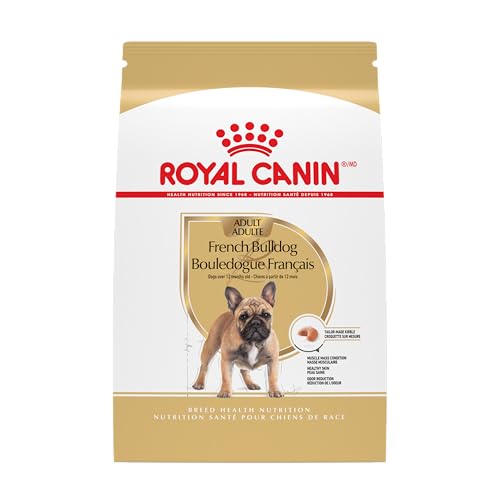
Quick answer
For most Frenchtons, our top pick is Royal Canin French Bulldog Adult Dry Dog Food, because its smaller, ridged kibble is shaped for the short, undershot jaw common to flat-faced breeds, it carries an AAFCO complete and balanced statement for adult maintenance, and its calorie density is moderate enough to help owners manage the weight gain Frenchtons are prone to. If your Frenchton has a sensitive stomach or recurring loose stools, Hill’s Science Diet Adult Sensitive Stomach and Skin fits better. On a tighter budget, Diamond Naturals Small Breed Adult delivers a named meat first ingredient at a lower cost per pound. For puppies under one year, choose Royal Canin French Bulldog Puppy, and if you want a grain-inclusive recipe with a single novel protein, Merrick Real Texas Beef and Sweet Potato is our pick. Always confirm any diet change with your veterinarian, especially if your dog has a medical condition.
What to consider for Dog Food For Frenchton
A Frenchton is a small, stocky crossbreed, usually 16 to 28 pounds, that inherits the brachycephalic (flat-faced) build of both parent breeds. That short muzzle changes how your dog picks up and chews kibble, so a smaller or specially shaped piece is often easier to eat and may reduce gulping, which in turn can reduce the air swallowing that contributes to gas and bloating. Frenchtons also tend to gain weight easily, and extra pounds put added strain on their breathing and joints, so portion control and a sensible calorie density matter more than for many breeds.
Skin and digestive sensitivity show up frequently in this line, so some owners do better with a limited or single named protein and an added omega source. Because Frenchtons are a small to medium breed rather than a giant one, large breed puppy formulas are not the right fit; a small breed or breed-specific recipe suits them better. None of this replaces individual veterinary guidance, since allergies, skin conditions, and stomach issues can have many causes that need a professional diagnosis.
What to look for in a dog food
Start with the label. Look for an AAFCO complete and balanced statement for the correct life stage, adult maintenance for grown dogs and growth for puppies, since that is your assurance the food can serve as a full diet rather than a topper. Check that the first ingredient is a named meat such as chicken, beef, lamb, or salmon, rather than a vague “meat” or an unnamed by-product as the sole protein.
For a typical adult Frenchton, a sensible target is roughly 22 to 30 percent protein and 12 to 18 percent fat on a dry matter basis, with calories in the area of 350 to 420 per cup so portions stay easy to manage; these are general planning ranges, not medical rules, and your vet may advise different numbers for your dog. Favor a recipe labeled for small breed or one with a smaller kibble, and look for joint and skin support such as added omega 3 fatty acids, glucosamine, or chondroitin, which may help support comfort in a stocky, compact dog. Treat any single food as one part of a plan you confirm with your veterinarian.
How we chose these picks
- We compared products using publicly available manufacturer information, ingredient panels, and guaranteed analysis figures rather than personal or paid testing.
- We confirmed each pick carries an AAFCO complete and balanced statement for a clearly stated life stage.
- We prioritized recipes with a named meat as the first ingredient over vague protein sources.
- We favored small breed or breed-specific kibble sizes suited to a brachycephalic mouth.
- We checked calorie density and fat levels for suitability to a weight-prone small to medium dog.
- We looked for added omega fatty acids or joint support where the recipe offered it.
- We reviewed each brand for publicly reported recall history and current availability on Amazon.
- Never ranked a product higher just because it pays a commission.
What to avoid
- Foods that list only an unnamed “meat meal” as the protein, with no species named, since you cannot judge quality or allergen risk.
- Defaulting to grain-free or legume-heavy recipes; the FDA investigation into a potential link between certain diets and canine dilated cardiomyopathy (DCM) is ongoing, and a grain-inclusive food is the safer default unless your veterinarian advises otherwise for a specific reason.
- Feeding an all-life-stages or large-breed-puppy formula to a small to medium puppy, since the nutrient and calorie balance is not tailored to the right growth pattern.
- Abrupt diet switches; transition over about 7 to 10 days by gradually mixing the new food in, which can help reduce stomach upset.
For more breed-fit and feeding help, see our dog guides, our dog food reviews, and our dog nutrition articles.


