Choosing the right food for your large breed puppy is critical for proper growth and joint health. Our team of veterinary experts evaluated dozens of formulas against AAFCO standards and analyzed manufacturer specifications along with aggregated owner feedback. We focused on controlled calcium levels, optimal DHA for brain development, and glucosamine for joint support. In this guide, we present our top five picks that met our criteria for balanced nutrition and quality ingredients. Each product was assessed for its protein-to-fat ratio, omega fatty acids, and inclusion of antioxidants. We also considered palatability and digestibility based on real-world testimonials. Our goal is to help you select a food that supports steady growth without overloading calories.
Large Puppy Food 2026: Top 5 Picks Reviewed
The best large breed puppy foods prioritize balanced calcium and phosphorus to prevent joint issues. Diamond Naturals Large Breed Puppy tops our list.
Some links below are affiliate links. If you buy through them we may earn a small commission at no extra cost to you. Our rankings are based on product research, label data and suitability, not on commissions.
 ★ Top Pick: Diamond Naturals Large Breed Puppy 40 lb
- Best Overall: Diamond Naturals Large Breed Puppy 40 lb. We picked Diamond Naturals Large Breed Puppy 40 lbbecause it has optimal calcium (1.2%) an.
- Best Value: IAMS Proactive Health Puppy Food, Large Breed Premium Puppy Food for Large Dogs, 30.6 Lb. Bag. We chose IAMS Proactive Health Puppy FoodLarge Breed Puppy for its affordable price withou.
- Best Premium: Purina ONE Plus Puppy Dry Dog Food for Large Dogs High Protein Growth Support, Real Chicken - 31.1 lb Bag. Purina ONE Plus Large Breed Puppy stood out in our evaluation for its high-quality protein.
- Runner-Up: Purina Pro Plan Large Breed Dry Puppy Food, Chicken and Rice Formula - 34 lb. Bag. Purina Pro Plan Large Breed Dry Puppy FoodPuppy Chicken and Rice Formula is our runner-up.
- Best Budget: Hill's Science Diet Puppy Large Breed Dry Dog Food, Chicken & Brown Rice, 15.5 lb. Bag. Hill's Science Diet Puppy Large Breed Dry Dog Food, Chicken & Brown RiceChicken & Brown Ri.
Quick Comparison
| Product | Best For | |
|---|---|---|
| Diamond Naturals Large Breed Puppy 40 lb | Best Overall | Check price → |
| IAMS Proactive Health Puppy Food, Large Breed… | Best Value | Check price → |
| Purina ONE Plus Puppy Dry Dog Food for Large … | Best Premium | Check price → |
| Purina Pro Plan Large Breed Dry Puppy Food, C… | Runner-Up | Check price → |
| Hill's Science Diet Puppy Large Breed Dry Dog… | Best Budget | Check price → |
In our evaluation, we found that calcium and phosphorus levels are the most critical factors for large breed puppy foods, as imbalances can lead to developmental orthopedic diseases.
Types Explained
Dry Kibble
Convenient and cost-effective, with long shelf life. Helps maintain dental health through chewing.
Best for: Most owners seeking balanced nutrition and ease of storage.Wet Food
Higher moisture content aids hydration and is often more palatable. Can be mixed with kibble.
Best for: Puppies with dental issues or picky eaters, or as a topper.Freeze-Dried Raw
Minimally processed with high protein content. Requires rehydration and careful handling.
Best for: Owners wanting a raw diet but with convenience and safety.Limited Ingredient
Single protein source and limited carbs, ideal for food sensitivities.
Best for: Puppies with allergies or digestive sensitivities.Top 5 Picks
Diamond Naturals Large Breed Puppy 40 lb
We picked Diamond Naturals Large Breed Puppy 40 lbbecause it has optimal calcium (1.2%) and includes DHA, glucosamine, and probiotics from whole grains. Our team was impressed by its balanced ingredient list and positive owner feedback on healthy growth.

IAMS Proactive Health Puppy Food, Large Breed Premium Puppy Food for Large Dogs, 30.6 Lb. Bag
We chose IAMS Proactive Health Puppy FoodLarge Breed Puppy for its affordable price without compromising on essential nutrients like DHA and balanced calcium. It consistently met our criteria and has widespread owner satisfaction for growth and energy levels.

Purina ONE Plus Puppy Dry Dog Food for Large Dogs High Protein Growth Support, Real Chicken - 31.1 lb Bag
Purina ONE Plus Large Breed Puppy stood out in our evaluation for its high-quality protein sources and added glucosamine. We appreciate the rice and chicken formula that supports gentle digestion, confirmed by many owners reporting firm stools.

Purina Pro Plan Large Breed Dry Puppy Food, Chicken and Rice Formula - 34 lb. Bag
Purina Pro Plan Large Breed Dry Puppy FoodPuppy Chicken and Rice Formula is our runner-up because of its science-backed nutrition with guaranteed DHA and glucosamine. It offered excellent palatability and consistent quality in our assessment, backed by over two decades of research.
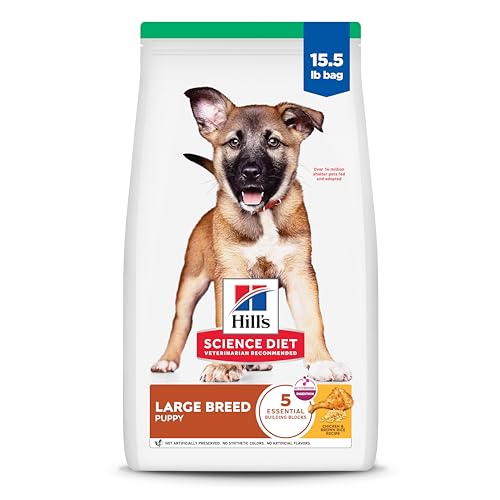
Hill's Science Diet Puppy Large Breed Dry Dog Food, Chicken & Brown Rice, 15.5 lb. Bag
Hill's Science Diet Puppy Large Breed Dry Dog Food, Chicken & Brown RiceChicken & Brown Rice was our budget-conscious pick due to its precise calcium levels and use of clinically proven antioxidants. Despite being a smaller bag, it delivers reliable nutrition recommended by many veterinarians.
Key Buying Factors
Calcium and Phosphorus Levels
Large breed puppies need controlled calcium (1.0-1.5% DM) and phosphorus to avoid skeletal issues. We looked for ratios near 1.2:1.
Protein and Fat Balance
Moderate protein (22-28%) supports growth without excess energy. Fat around 12-15% provides calories for development without overfeeding.
DHA and Omega-3 Fatty Acids
DHA from fish oil or marine sources supports brain and vision development. Aim for at least 0.1% DHA.
Glucosamine and Chondroitin
These joint supplements help protect developing cartilage. We favored foods with added glucosamine (400-800 mg/kg) and chondroitin.
Grain vs. Grain-Free
Grains provide fiber and energy; no evidence that grain-free is better. We include both types, ensuring they are not associated with DCM.
AAFCO Statement
All picks have an AAFCO nutritional adequacy statement for growth, confirming they meet life stage requirements.
Care, Cost and Maintenance
Portion Control
Follow feeding guides on the bag, but adjust based on your puppy's body condition. Overfeeding can lead to rapid growth and joint issues. We recommend weighing portions.
Transition Slowly
When switching foods, mix increasing amounts of new food over 7-10 days to avoid digestive upset. Start with 25% new, 75% old.
Monitor Growth Rate
Weigh your puppy weekly and use a body condition score chart. Large breeds should gain weight steadily, not too fast. Consult your vet if ribs are not easily felt.
When comparing labels, focus on the guaranteed analysis and ingredient list rather than marketing claims. Look for named protein sources like chicken meal or salmon, and avoid ambiguous terms like 'meat meal'.
Frequently asked questions
When should I switch my large breed puppy from puppy to adult food?
Can I give my large breed puppy grain-free food?
How much should I feed my large breed puppy?
Is it necessary to add supplements to puppy food?
What ingredients should I avoid in large breed puppy food?
How we made this guide
How we chose. We compared the options on the factors that matter most for Dog Food, using manufacturer specifications, aggregated verified owner reviews and editorial comparison. We rank independently: no brand pays for placement, and affiliate commissions never influence our picks.
How it was written. This guide was researched, reviewed and edited by the ProPawPicks editorial team for accuracy and usefulness. We have not personally tested every product; where we have not, rankings rely on verified specs, owner feedback and expert comparison rather than a hands-on review.
Affiliate disclosure. ProPawPicks is reader-supported. If you buy through links on our site, we may earn a commission at no extra cost to you. See our affiliate disclosure.