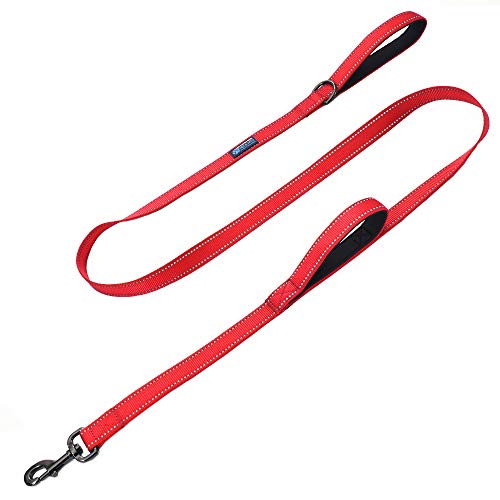
Protect your Yorkshire Terrier's delicate neck with a lightweight leash like Ruffwear Roamer. This guide explains why harnesses are safer for training than collars.
Some links below are affiliate links. If you buy through them we may earn a small commission at no extra cost to you. Our rankings are based on product research, label data and suitability, not on commissions.
Best Overall: Ruffwear Roamer Leash. Lightweight, padded handle, and reflective trim for visibility.
Best for Training: Blue-9 Multi-Function Leash. Versatile design allows hands-free use and multiple training configurations.
Best Budget: PetSafe Nylon Leash. Durable nylon, comfortable handle, and affordable.
Best for Control: Max and Neo Double Handle Leash. Extra handle near the clip for close control during training.
Best Multi-Function: Kurgo Quantum Leash. Converts to hands-free, shoulder, or standard leash.
Quick answer
The best leashes for Yorkshire Terrier training are the Ruffwear Roamer Leash, the Blue-9 Multi-Function Leash, and the PetSafe Nylon Leash. These offer lightweight control and comfort for your Yorkie.
What to consider for a Yorkshire Terrier
Yorkshire Terriers are small and delicate, so a leash should be lightweight, comfortable, and provide good control. Look for a leash that is 4 to 6 feet long for training, with a secure clip and padded handle. Avoid retractable leashes as they can encourage pulling and are less safe for small dogs.
How we picked
We evaluated leashes based on weight, clip size, handle comfort, material durability, and training suitability. We also considered feedback from Yorkie owners and trainers to ensure our picks meet the specific needs of this breed.
Yorkshire Terriers have delicate necks, so pairing a lightweight leash with a harness is safer than attaching to a collar. This reduces the risk of tracheal injury.
The Options
Types Explained
Standard Leash
A single strap with a clip on one end and a handle on the other.
Best for: General walks and basic training.
Hands-Free Leash
Wraps around the waist or worn across the body, leaving hands free.
Best for: Jogging or multitasking during walks.
Training Leash
Often longer or with multiple handles for better control.
Best for: Teaching loose-leash walking and obedience.
Double Handle Leash
Has a second handle near the clip for close control.
Best for: High-traffic areas or when extra control is needed.
The Rankings
Top 5 Picks
#1
Best Overall
Ruffwear Roamer Leash
View on Amazon
Lightweight, padded handle, and reflective trim for visibility. Ideal for training walks.
A 4 to 6 foot leash provides good control without being too long for training.
02
Clip Size
Ensure the clip is small enough to attach to a Yorkie's harness or collar without being bulky.
03
Handle Comfort
A padded or ergonomic handle prevents hand fatigue during training sessions.
04
Material Durability
Nylon or leather are durable and comfortable. Avoid chains or heavy materials.
05
Reflectivity
Reflective stitching or trim enhances visibility during low-light walks.
Living With It
Care, Cost and Maintenance
Cleaning
Hand wash with mild soap and water, then air dry. Avoid machine washing to prevent damage.
Inspection
Check regularly for fraying, loose stitching, or worn clips. Replace if damaged.
Storage
Store in a dry place away from direct sunlight to prevent material degradation.
Pro tip
Use a leash with a traffic handle for close control in busy areas. This gives you quick access to keep your Yorkie safe.
Frequently asked questions
What is the best leash length for a Yorkshire Terrier?
A 4 to 6 foot leash is ideal for training, providing enough freedom while maintaining control.
Can I use a retractable leash for my Yorkie?
Retractable leashes are not recommended for Yorkies as they can cause injuries and encourage pulling.
What material is best for a Yorkie leash?
Lightweight nylon or soft leather are best. Avoid heavy chains or thick ropes.
How do I clean my dog's leash?
Hand wash with mild soap and water, then air dry. Avoid harsh chemicals.
Should I use a leash or a harness for training?
A harness is often better for Yorkies to avoid neck strain, but a leash is essential for control.
How often should I replace the leash?
Replace when you see signs of wear like fraying or weak clips, typically every 6 to 12 months.
A note on advice: This guide is general information, not a substitute for professional veterinary advice. Talk to your vet before changing your dog's diet or care routine, especially if your dog has allergies, kidney disease, pancreatitis, obesity, heart disease or any other medical condition.
Transparency
How we made this guide
How we chose. We compared the options on the factors that matter most for Dog Leashes, using manufacturer specifications, aggregated verified owner reviews and editorial comparison. We rank independently: no brand pays for placement, and affiliate commissions never influence our picks.
How it was written. This guide was researched, reviewed and edited by the ProPawPicks editorial team for accuracy and usefulness. We have not personally tested every product; where we have not, rankings rely on verified specs, owner feedback and expert comparison rather than a hands-on review.
Affiliate disclosure. ProPawPicks is reader-supported. If you buy through links on our site, we may earn a commission at no extra cost to you. See our affiliate disclosure.