Quick answer
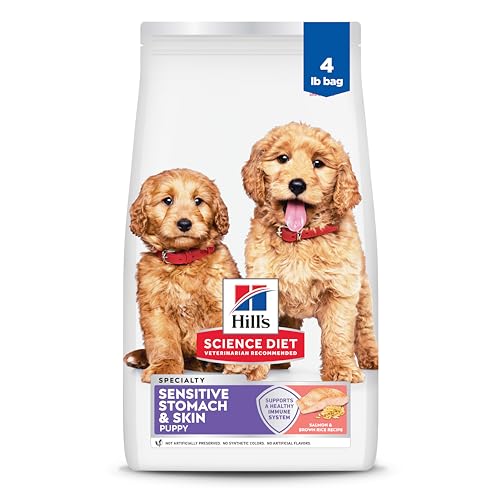
For most Bull Terrier puppies our editorial team leans toward Royal Canin Medium Puppy Dry Dog Food as the best overall starting point, because it carries an AAFCO complete and balanced statement for growth, uses a named animal protein, and is formulated for the medium size class most Standard Bull Terriers land in as adults. If your puppy has a sensitive stomach or itchy skin, Hill’s Science Diet Puppy Sensitive Stomach & Skin tends to fit better. On a tighter budget, Diamond Naturals Large Breed Puppy is a reasonable grain-inclusive option, while Purina Pro Plan Puppy Chicken & Rice suits owners wanting a widely available, research-backed pick and Eukanuba Puppy Medium Breed works well for active, fast-developing pups. Always confirm the formula matches your dog’s projected adult size, and ask your veterinarian before changing diets for any health reason.
What to consider for Puppy Food For Bull Terrier
Bull Terriers are a muscular, energetic breed that usually matures into the medium to large range, so a puppy formula should support steady, controlled growth rather than the fastest possible weight gain. The breed is well known for skin and coat sensitivities and food-related itching in some lines, which makes a clearly named protein and a short, recognizable ingredient list valuable. Many Bull Terriers are also prone to overeating and putting on excess weight, so calorie density and portion control matter from the start. Some lines carry a hereditary risk for kidney issues and zinc-related skin conditions, so if you see persistent skin, coat, or urinary changes, talk to your veterinarian rather than self-treating through diet. Choosing a formula that matches your puppy’s projected adult size, supported by named protein and omega fatty acids for the coat, gives you a sensible foundation.
What to look for in a dog food
Start with the label. Look for an AAFCO complete and balanced statement for “growth” or “all life stages,” which confirms the food is formulated to nourish a growing puppy rather than just an adult. The first ingredient should be a named meat such as chicken, lamb, salmon, or beef, not a vague “meat” or “animal” source. For most puppies, a protein level in the rough range of 26 to 32 percent and fat around 12 to 18 percent on a dry-matter basis is a sensible target, with calories typically near 350 to 450 per cup, though your veterinarian can confirm what suits your individual dog. Match the formula to size: a Standard Bull Terrier often fits a medium or large breed puppy recipe, where controlled calcium and phosphorus help joints develop at a measured pace. Omega-3 and omega-6 fatty acids, often from fish oil or flaxseed, can support skin and coat, which is especially relevant for this breed.
How we chose these picks
- We compared formulas using publicly available product information, manufacturer spec sheets, and ingredient panels, not personal or clinical testing.
- We required an AAFCO complete and balanced statement for growth or all life stages on every pick.
- We prioritized recipes with a named meat as the first ingredient over generic “meat meal” sources.
- We favored grain-inclusive formulas as the default, given the ongoing FDA investigation into diet and canine DCM.
- We checked that each formula matched a Bull Terrier’s likely adult size class, medium to large.
- We looked for sensible protein, fat, and calorie levels appropriate for steady puppy growth.
- We noted skin and coat support, such as added omega fatty acids, given the breed’s known sensitivities.
- Never ranked a product higher just because it pays a commission.
What to avoid
- Foods that list only an unnamed “meat meal” as the protein, with no identified animal source.
- Defaulting to grain-free or legume-heavy recipes; the FDA investigation into a potential link between certain diets and canine DCM is ongoing, and a grain-inclusive formula is the safer default unless your veterinarian advises otherwise.
- Feeding an “all life stages” or adult formula to a large-breed puppy without confirming the calcium and growth profile is appropriate, since uncontrolled growth can stress developing joints.
- Abrupt diet switches; transition over about 7 to 10 days by gradually mixing old and new food to reduce stomach upset.
For more, browse our dog guides, our dog food roundups, and our dog nutrition articles to keep building a sensible feeding plan for your puppy.