Quick answer
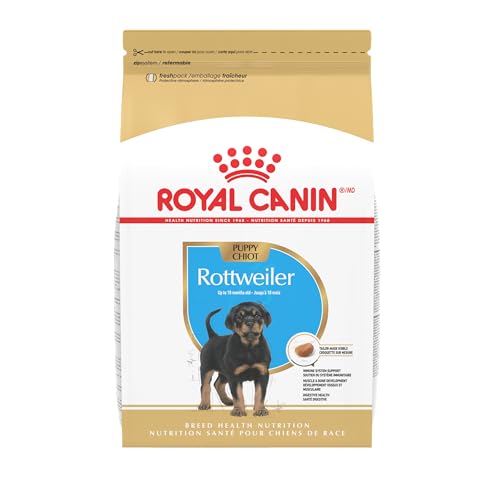
Our top overall pick for most Rottweiler puppies is Royal Canin Rottweiler Puppy Dry Dog Food, a breed-specific large-breed formula built around controlled calorie and calcium levels that aim to support a slow, steady growth rate, which is generally considered important for large-breed skeletal development. If you want a more affordable everyday option, Purina Pro Plan Large Breed Puppy is a strong value, and for puppies with a sensitive stomach our editorial team leans toward Hill’s Science Diet Puppy Large Breed. The runners-up fit better when budget, ingredient preferences, or a specific digestive sensitivity is your main priority. Always confirm the right plan with your veterinarian, especially if your puppy has a medical condition.
What to consider for Puppy Food For Rottweiler
Rottweilers are a large, heavy-boned breed that can reach 80 to 130 pounds as adults, so the central concern during puppyhood is growth rate, not just total calories. Feeding too rich a diet or letting a large-breed puppy grow too fast is widely associated with developmental orthopedic concerns, which is why large-breed puppy formulas deliberately control calorie density and calcium. Look for a food that carries an AAFCO statement specifically noting it is suitable for growth of large-size dogs (those expected to reach 70 pounds or more as adults).
Rottweilers are also prone to joint issues such as hip and elbow concerns, so recipes that include omega-3 fatty acids (often from fish oil) and sensible glucosamine support are reasonable. Their muscular build means they benefit from a named meat as the first ingredient and a moderate, not extreme, protein and fat level. Many Rottweilers can also have sensitive digestion, so a single, identifiable protein source and a recipe that agrees with your individual dog matter more than marketing claims. None of this replaces veterinary guidance for a specific health issue.
What to look for in a dog food
AAFCO statement for the right life stage. The label should say the food is complete and balanced for growth, and ideally that it is formulated for growth of large-size dogs. Avoid relying on an “all life stages” food for a large-breed puppy, since those are not always calcium-controlled for big breeds.
A named meat first. The first ingredient should be a specific named protein such as chicken, beef, lamb, or a named meat meal, not a vague “meat” or “meat by-products” with no species named.
Sensible protein, fat, and calories. As a practical, non-medical guideline, many large-breed puppy foods land around 26 to 32 percent protein and roughly 12 to 16 percent fat on a dry-matter basis, with moderate calorie density. These are general ranges, not strict rules, and your veterinarian can advise what suits your individual puppy.
Large-breed suitability and calcium control. For a Rottweiler, prioritize foods designed for large-breed growth, which typically cap calcium near 1.2 to 1.5 percent on a dry-matter basis. This is one of the most important large-breed considerations.
Joint and omega support. Omega-3 fatty acids such as DHA support development, and modest glucosamine or chondroitin can be a reasonable addition for a breed prone to joint concerns. Treat these as supportive, not curative.
How we chose these picks
- We prioritized formulas that carry an AAFCO complete and balanced statement for growth, with a preference for large-breed growth suitability.
- We favored recipes with a clearly named meat as the first ingredient over vague unnamed protein sources.
- We checked that protein, fat, and calorie levels fell within sensible large-breed puppy ranges rather than extreme high-calorie profiles.
- We looked for controlled calcium levels appropriate for large-breed skeletal development.
- We gave weight to added DHA, omega-3 fatty acids, and joint-supportive ingredients relevant to a joint-prone breed.
- We compared using publicly available product information, manufacturer specifications, and established nutritional guidance, not personal lab testing.
- We reviewed each brand’s general recall and transparency history through public sources and favored manufacturers with consistent quality programs.
- Never ranked a product higher just because it pays a commission.
What to avoid
- An unnamed “meat meal” or generic “meat” listed as the only protein, with no species identified.
- Defaulting to grain-free or legume-heavy recipes by default. The FDA investigation into a potential link between certain diets and canine dilated cardiomyopathy is ongoing, and grain-inclusive recipes are the safer default unless your veterinarian advises otherwise.
- Feeding an “all life stages” food to a large-breed puppy, since these are not always calcium-controlled for big breeds during growth.
- Abrupt diet switches. Transition foods gradually over about 7 to 10 days to reduce the chance of digestive upset.
For more help choosing, browse our dog guides, our dog food roundups, and our dog nutrition resources.


